Skip to content

Shtetl in the Sun

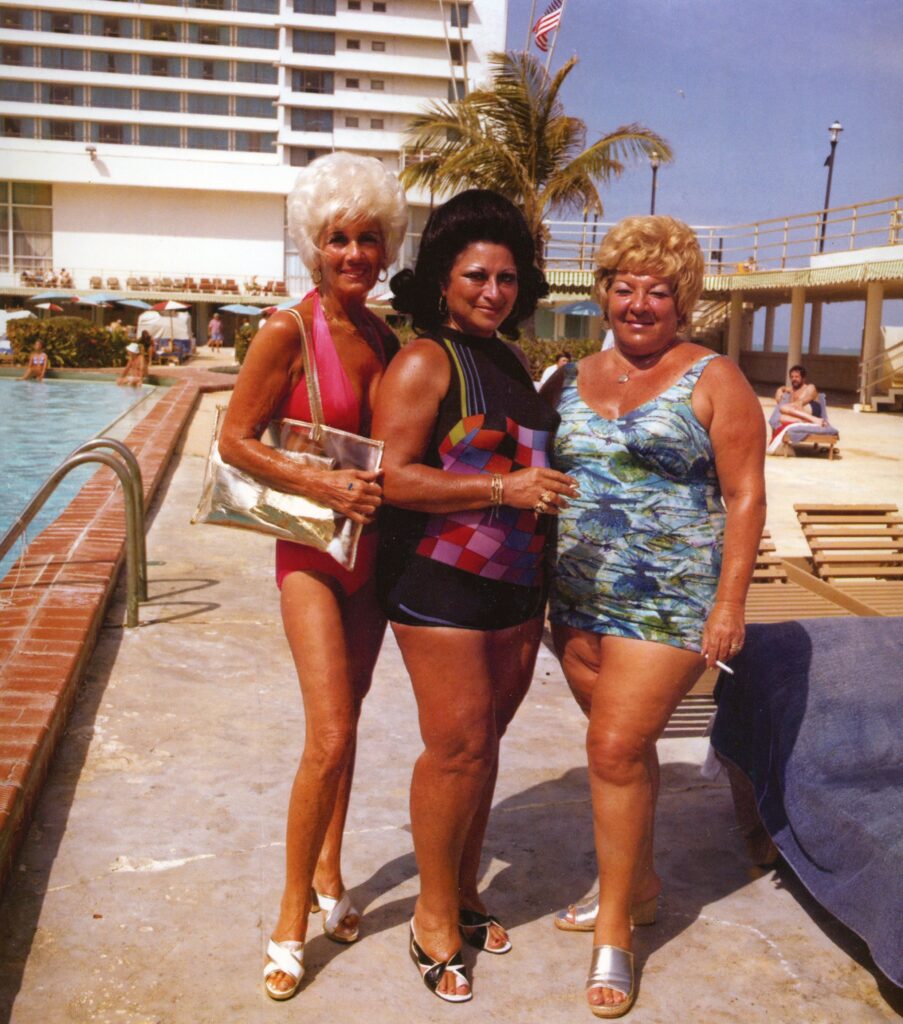
In the late 1970s, more than 20,000 elderly Jews, many of them Holocaust survivors and transplants from the Tri-state area or Canada, lived in South Beach, Florida – the storied Miami neighbourhood nestled between Biscayne Bay and the Atlantic Ocean. This area of less than two square miles became akin to a modern-day shtetl, reminiscent of the tightly knit, predominantly Jewish pre-World War II Eastern European villages.

Shtetl in the Sun, on loan from the Jewish Museum of Florida-FIU, lovingly captures the ferocious strangeness of this place through the eyes of Andy Sweet, one of the most dynamic young American photographers of the late 1970s.  Photographed between 1977 and 1980, Sweet’s work showcases a distinct aesthetic and cultural moment in South Beach: a rich portrait of lives that unfolded between the paparazzi-chronicled Beach visits of Dean Martin in the 1950s and 60s, and Madonna’s reign in the 1990s. His photographs dispel the stereotype of 1970s South Beach being “God’s Waiting Room.”  Instead, the images capture the community’s daily rhythms in all their beach-strolling, deli-noshing and cha-cha dancing glory.

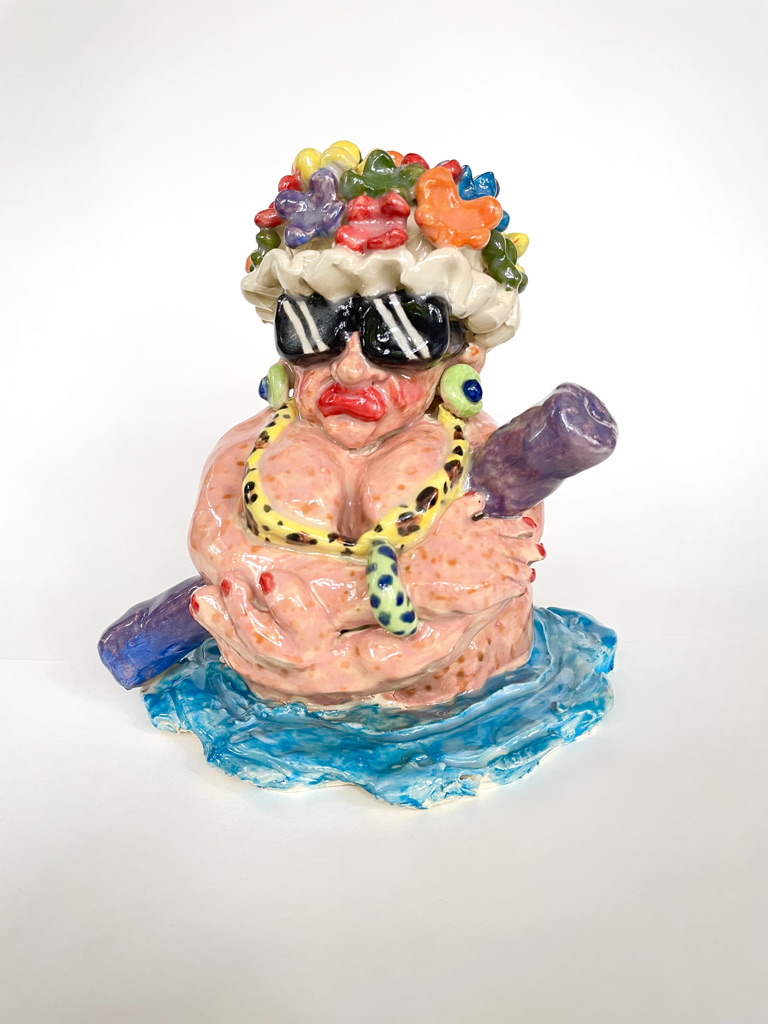
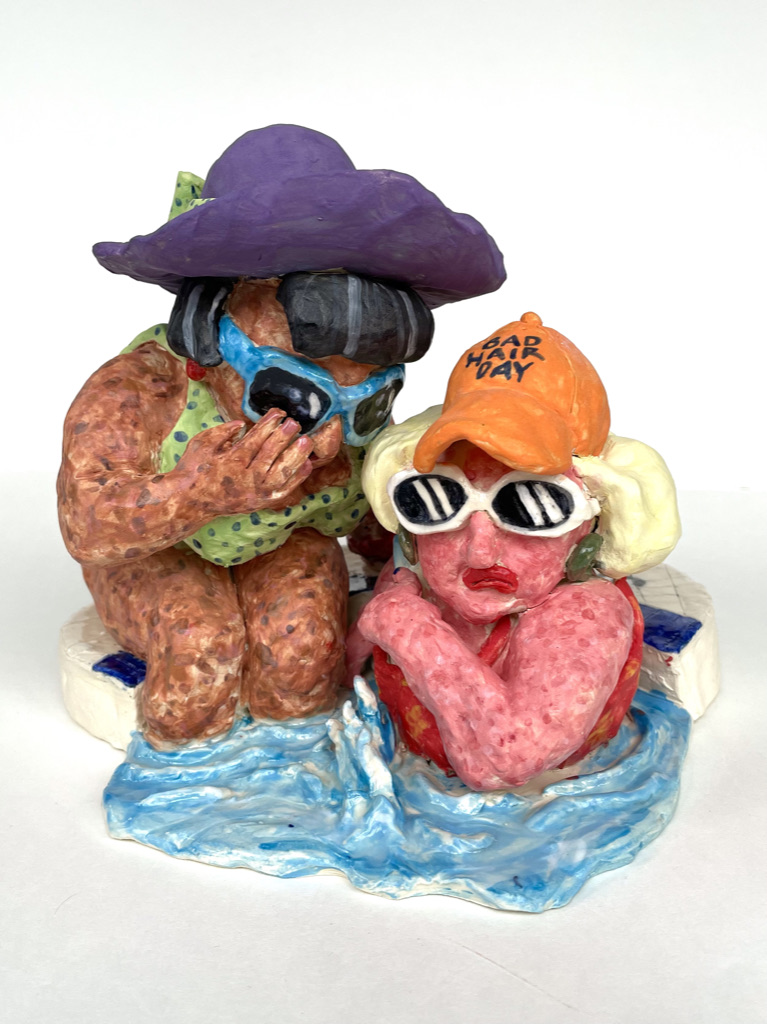
On view in Canada for the first time, the Museum of Jewish Montreal has put Shtetl in the Sun in conversation with the tongue-in-cheek sculptures of Canadian contemporary ceramicist Jonah Strub. Irreverent, extravagant, and kitsch, Strub’s figures appear to be taken straight from the candy-coloured scenes caught on film by Sweet. Together, the works highlight an emblematic and instantly recognizable North American Jewish phenomenon and figure – the Snowbird – whose vibrancy resonates across time, regions, and generations.

Andy Sweet (1953-1982) grew up on North Bay Road, not far from South Beach. At age 12, he converted a small room in his house into a darkroom. His father, Chick, was a judge and his mother, Audrey, was the daughter of hoteliers who opened the Monte Carlo and the Royal Palm Hotels on Miami Beach. Andy went to the University of South Florida in Tampa, joining his sister Ellen. He proved to be a maestro in the darkroom, able to go in at midnight with a box of 50 sheets of photographic paper and come out in the morning with 49 perfect images.

After completing his MFA at the University of Colorado at Boulder, Andy was drawn back to South Beach, the beauty of the old faces, possibly even the sense that this world would soon be lost. The artist’s early and violent death has often overshadowed the body of work he developed in his short career. A perceptive and intuitive street photographer, Andy’s photographs of South Beach brought together in Shtetl in the Sun are a tribute to the people who lived and played there during that time, perfectly encapsulating the lively spirit and warmth that shaped their community. 


Jonah Strub (b. 1996) is a Toronto-based gay, Jewish artist with a primary focus on sculptural ceramics. Jonah’s work is a love letter to camp, kitsch, musical theatre, Yiddish humour, and drag, and explores his own femininity through the humour of traditionally queer and Jewish aesthetics. Jonah explores themes like glamorous grandmothers, cutesy creatures, and sublime self-portraiture in his work. Jonah often superimposes his face on his creations, paired with over-the-top patterns and exuberant, joyful imagery, to celebrate himself as a fully realized kitsch object. Jonah aims to create dialogue around masculinity, femininity, matzo-balls, and outrageous up-dos using humor, bright colors, animal prints, and body hair, embracing the harmony of his Jewish and queer identities.

Jonah holds a BA in Studio Art from the University of Guelph, specializing in oil painting and sculpture, and discovered ceramics during an exchange in Bremen, Germany in 2019 where he immediately fell in love with the medium. He earned a certificate in Cartooning and Illustration from George Brown College in 2022. In 2023, he participated in the Banff Emerging Artist in Residence Program. Jonah has exhibited around Canada and abroad including The Canadian Clay and Glass Museum, Art Gallery of Burlington, The Artist Project, and galleries in Germany and the USA.

In Collaboration With

This exhibition was presented in collaboration with the Jewish Museum of Florida (FIU). 

  • Logo for the Jewish Museum of Florida

BACK RIVER

Weaving together themes of loss, memory, community, and urban landscapes, BACK RIVER contemplates what is forgotten, and how it can be remembered.

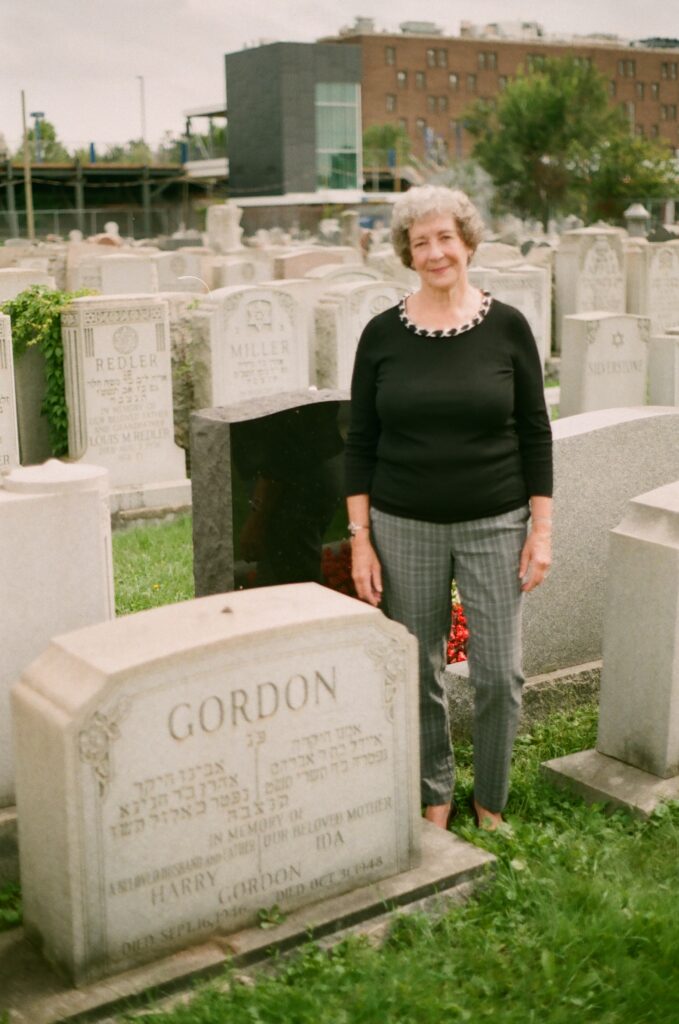
Sonia Bazar’s body of work presented in BACK RIVER is named for Montreal’s oldest standalone Jewish burial site: the Back River Cemetery. Established in the 1880s in the Montreal neighborhood of Ahuntsic, the cemetery is one of the earliest resting places for first-generation Jewish migrants to Canada. Built upon swampland and founded for a growing immigrant community, the cemetery today holds a peculiar and enigmatic place in the city’s landscape. 

Following the peak of its use in the 1930s and 1920s, Back River came close to abandonment in the late 20th century, followed by renewed interest to restore the historic site in the 1990s by the Jewish community. Still in use today for community burials, many of which are indigent, Back River’s flood-prone terrain combined with climate change make maintenance and conservation an ongoing struggle. Montreal’s urban growth has also been shaped by the cemetery. Its two sections – the old and the new – are bisected by rue Sauvé, with the Sauvé Metro station at the centre of the intersection that cuts through the site; the Metro line itself was built directly beneath the Back River in the 1960s.

The cemetery’s physical fragmentation and mired landscape mirrors its story, which remains relatively unknown by the local Jewish community or by Ahunstic’s majority French-Canadian and newly-arrived immigrant residents. Sonia Bazar’s work ruminates on the challenges of solving the puzzle surrounding the cemetery’s founding, evolution, and near-abandonment. With the artist’s own family members buried at the Back River, piecing together knowledge of this space becomes an act of personal archiving and placemaking. However, absence and scarcity of information about the Back River Cemetery remain a core part of its story and the memory of its occupants.

Through research-creation using archival sources and oral histories, Bazar invites us to become part of the cemetery’s contemporary archive as she reimagines its 140-year history through photography, installation, and sculptural work.

Partners & Sponsors

Sonia Bazar and the Museum of Jewish Montreal acknowledge the support of the Canada Council for the Arts. We would like to thank Bétonel Dulux for their donation of exhibition materials. The artist would also like to thank Maryam Pourarya, The McClure Gallery, Dr. Anna Sheftel, Romy Shoam, Naomi Frost, the Board and Staff of the Back River Cemetery, Dr. Julius Erdstein, and everyone who participated in interviews.

The Past is Before You

How can exploring a family archive transform our understanding of the collective present?

The Past Is Before You explores this question by considering how memories can be examined, reimagined and even uplifted, shedding new light on the artist’s personal history.

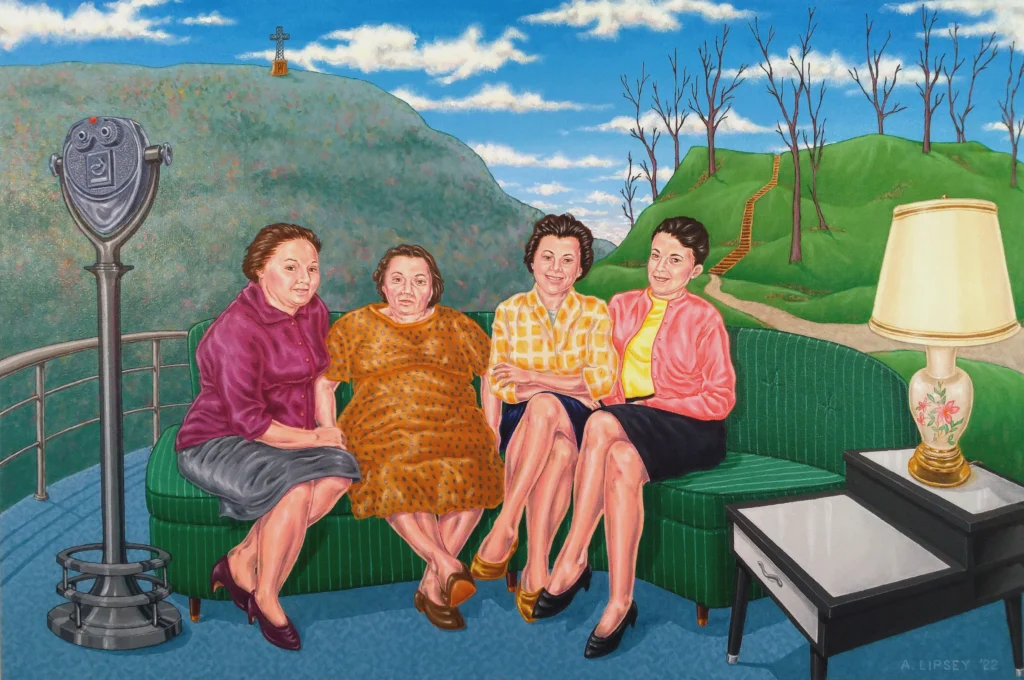
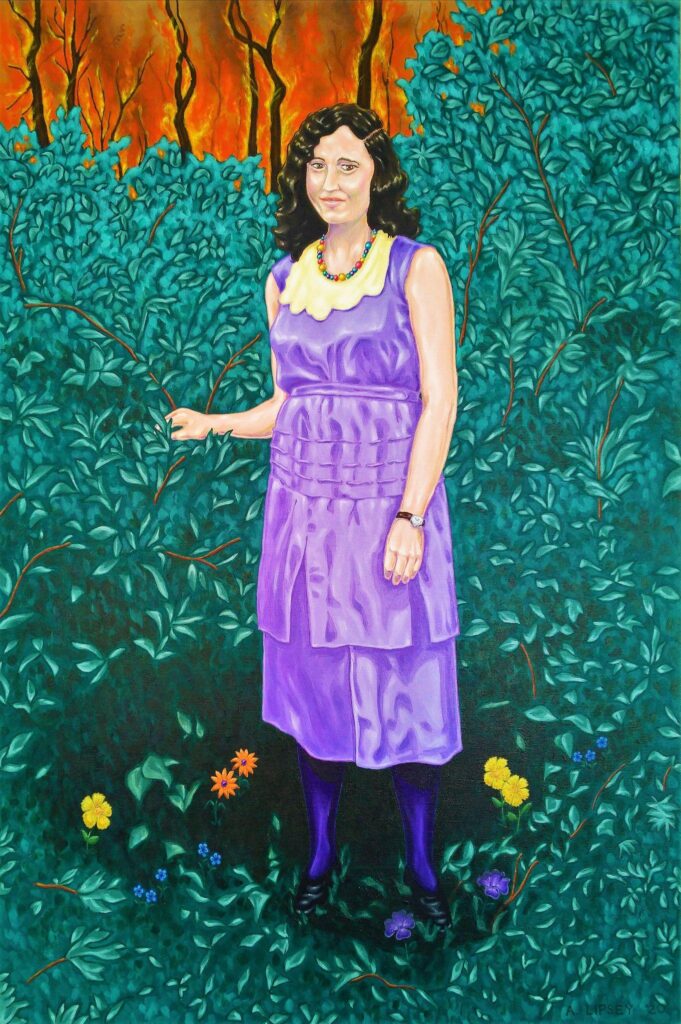
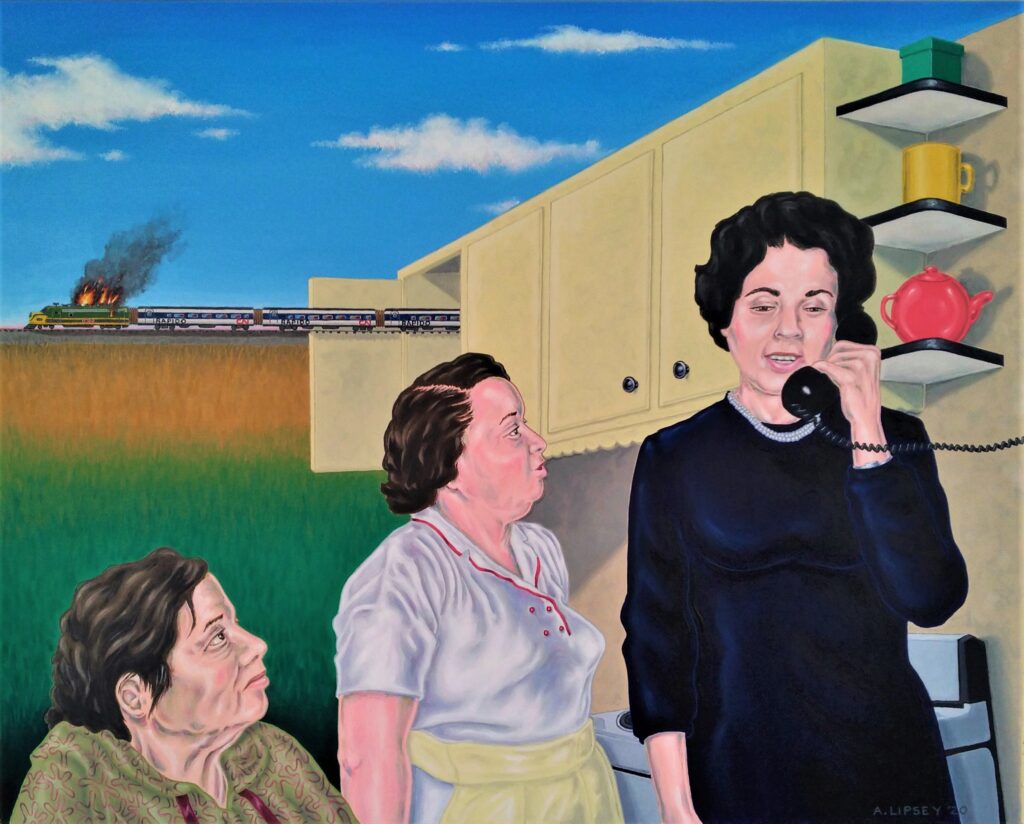
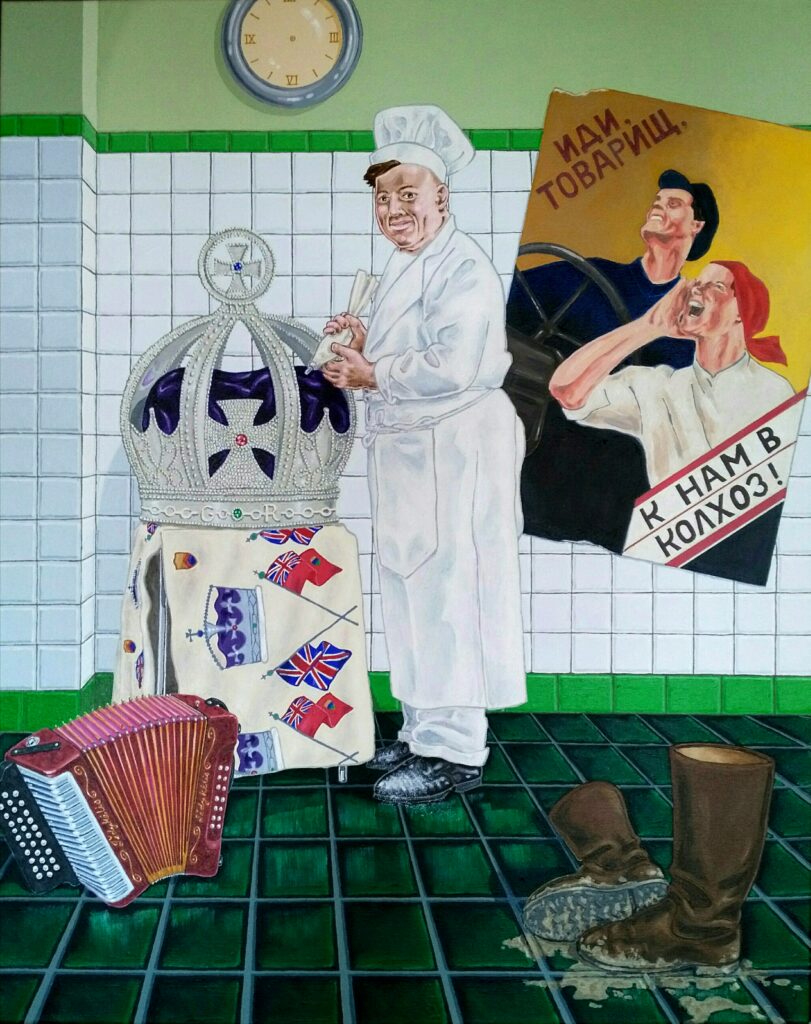
An exercise in catharsis, Arnie Lipsey’s paintings forgo linear time, choosing instead to collapse the past, present, and future. Each work begins with an archival family photograph, and branches out into thematic explorations of war, survival, immigration, family life, as well as leisure. Lipsey’s paintings depict everyday Jewish life in Eastern Europe and Montreal from his family’s vantage point, highlighting stories transmitted across generations that are simultaneously loving, comforting, humorous, and haunting.

Evoking the spirit of magical realism, Lipsey’s dreamlike compositions lie somewhere along the boundaries of fantasy and reality: saturated hues replace the black-and-white source material, and figures are posed in the midst of often-surreal and multi-temporal settings. By filling in the blanks of family lore, it feels logical that Lipsey’s compositions lean into the absurd and surreal. Lipsey’s paintings call into question the potential of art as a tool to grasp ancestral memories that are not entirely our own.

To some – and especially among those Jewish families who experienced displacement and have a limited historical record – the family photo album is a private, even sacred, object. In vivid colour, The Past Is Before You demonstrates alternative methods and new possibilities for preserving the family archive.

My work explores an interior landscape, excavating imagery for meaning, and attempting to understand the present by examining the past. My paintings use portraiture, narrative, psychoanalytic dream imagery, and free association to examine questions of identity, family history, and the relationship between the personal and the universal. My work uses archival family photographs as a point of departure for this inquiry into the psychological patterns that under-gird family mythologies. Issues of war, survival, immigration and second-generation trauma are also explored. Echoes still remain of a childhood spent in the culturally bifurcated world of Jewish Montreal. 

I re-imagine black-and-white source material as full-colour imagery, heightening visual impact while bringing the past into the present. Through this layered exploration of family dynamics and biography, the viewer may initially see these images as benign or nostalgic, only to have their sense of comfort upended by surreal elements that are sometimes humorous, sometimes foreboding. The viewer is invited to witness the emotional specificity of someone else’s family, and then relate it to the mythologies of their own. My paintings are suffused with magic realism, and are further influenced by neoclassicism, commercial advertising, storybook art, and a design sense borne of my career in animation. 

Public Intimacy

Where is the line between public and private?


Though not often explicitly posed, we navigate this question every day to guide how we move through the world. Depending on time, place, and who surrounds us, individual and collective definitions of public and private invariably shift. Public Intimacy asks us to consider this changing definition, and the liminal space between.

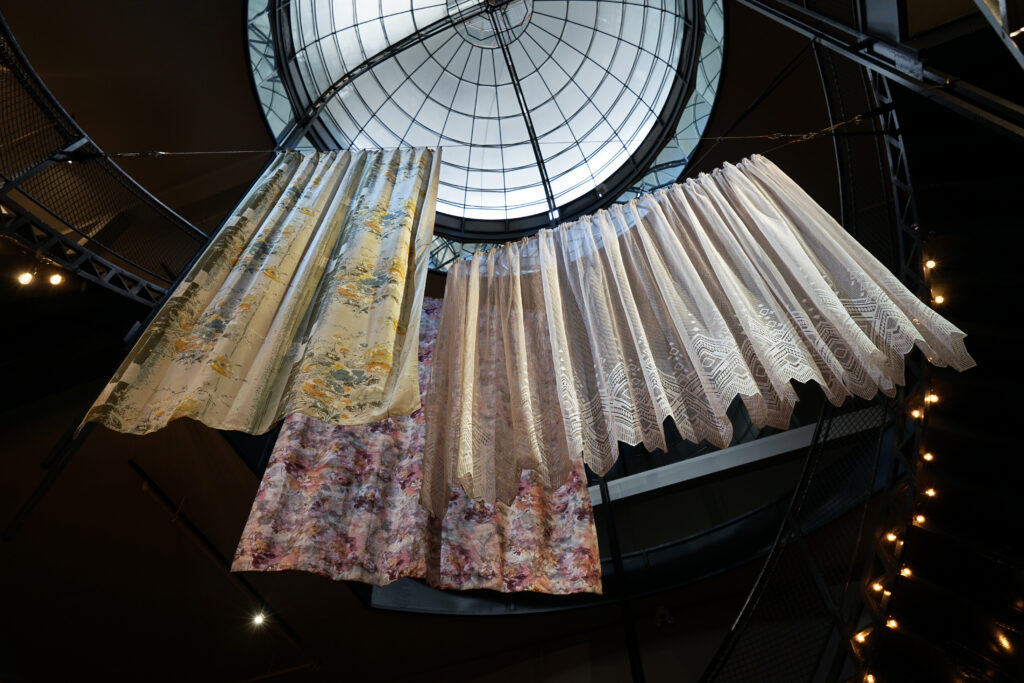
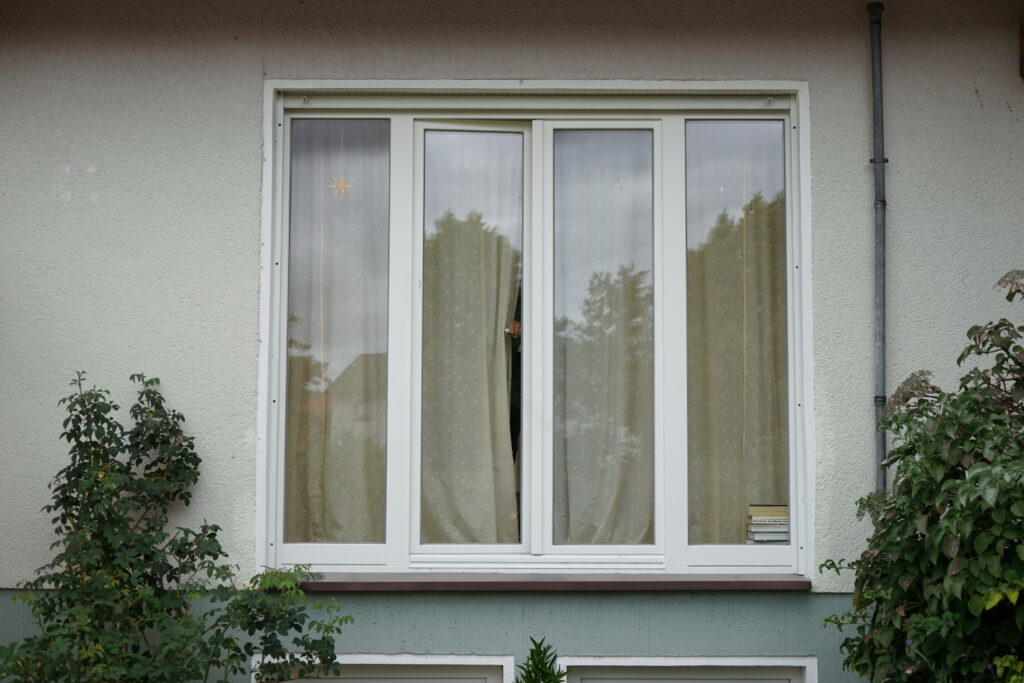
The works presented in Public Intimacy each originate from a real domestic space. The curtains you see are second-hand, sourced from throughout Germany, and hung in homes much like the ones photographed and on display. The textiles and photographed facades draw on domestic structures used to separate public and private spaces. The curtain, practically and symbolically, points to the tenuous divisions and changing frame of where private space gives way to public. In as much as it provides refuge from the outside world, the curtain equally hides from view or shuts us off from what may be happening on our doorstep.

Sophia Hirsch and Johannes Mundinger created this body of work drawing from and within the domestic spaces of Berlin, Offenburg, and other German cities – a regional context still contending with a history of state and civic violence from the Holocaust, as well as a contemporary resurgence of antisemitism and xenophobia in the rise of neo-Nazi movements and the far-right. In addition, our world is more connected than ever before, and in the wake of a global pandemic, new spaces and considerations have opened up questions on how we act or what we say both online and in real life. When or where do we draw the curtain? And what does it block out?

As the artists consider this reality in their own locale, their work invites you to consider in equal measure your own “curtains,” their contexts, and what they may delineate.

A curtain is a tool to divide inside from outside, separating private sphere from public space. It works as the eyelid of an apartment, making a shelter for intimacy. On the one hand, it creates a hideout from the gaze of others, a temporary escape from social control.

On the other hand, in German the expression “to draw the curtains” is often used to refer to people who decide not to see, not to intervene in current events. We want to explore the field between the possibility of individual freedom and ignorance towards wider social realities.

The idea of the silent observer, the very (in-)active role of the bystander, whether in our private lives or historical events, was the idea that started this project. The person behind the curtain, who doesn’t do much else other than watch events unfold. A figure that hides and is often ignored, but crucially influences the course of history.

The curtains themselves are of different origins; donated pieces, found in abandoned buildings, and bought second-hand. They differ in fabric and pattern – but are all pieces that were once chosen as just the perfect item for someone.

Visitors are welcome to walk through and experience the installation physically. You can move one curtain aside, but you will find another one in front of you. Visitors are invited to pull them aside or draw them together, to find individual ways though the installation or create new spaces within it.

Funders

We acknowledge the support of the Conseil des arts de Montréal and the Consulate General of the Federal Republic of Germany in Montréal. 

  • Conseil des arts de Montréal logo
  • German Consulate of Montreal Logo

Contact Us