
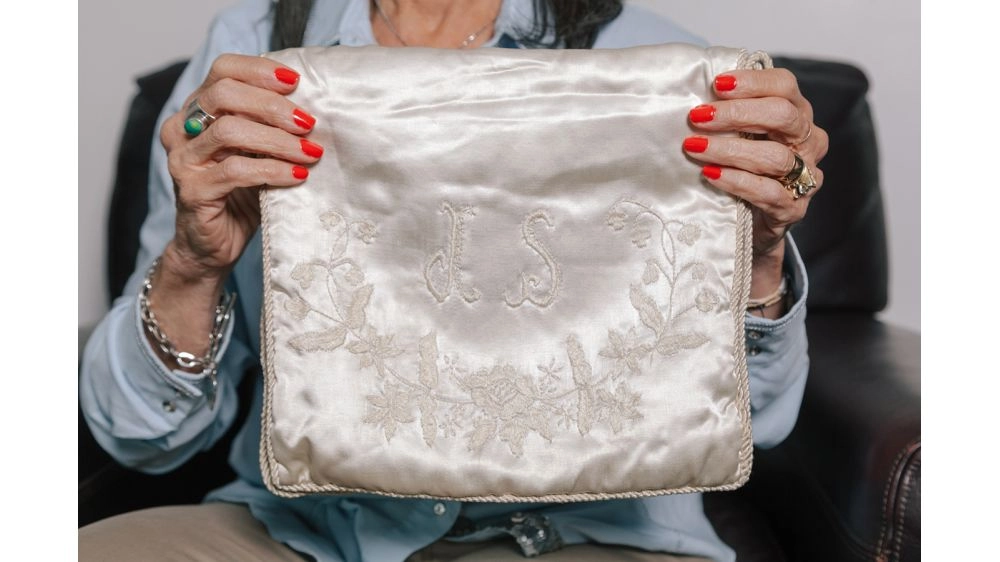
Listen to this Oral History
Description
Listen to Rose Simon Schwartz describe the euphoric freedom and sense of relief she and her family felt upon immigrating from Egypt to Montreal, as well as her later involvement with the Spanish and Portuguese Synagogue and Montreal's Jewish community more broadly.Transcription
(0:00 - 1:19)
We came to Montreal in 1963, September 1963, because it was the first time I was taking the plane, for the first time I was leaving Egypt, I'd never left Egypt, and my first thought was to insult the president at the time, Gamal Abdel Nasser, openly, because I was not allowed to do it, and I really said it out loud, I insulted him, and that was my freedom. I am free, even if I was a child, I felt that I was not free, I am free, and this is what I'm allowed to say, so I just blurted out an insult to the president. Like I said, my father was a very closed-in man, because he did not want to bother us, or he did not want to cause any fear in us, but he admitted, he said that until the plane took off, he almost could not breathe, and the first time in months that he was able to breathe freely was when he was on the plane.
(1:19 - 3:16)
He had a lot of reservation, he had a lot of fear, fear of the unknown, because like I said, he was a breadwinner, we were six people, my mother never worked in her life, and we were young enough, my brother had to go to university, he was at the age of going to university, I was going to elementary school, so there was a lot of fear of the unknown, whether we will make it, how will we survive, but like he said to me, the euphoria of being free was much greater than any fear he felt. We arrived in the Côte-des-Neiges neighborhood, this is where we lived, my distant aunt, my aunt lived there, and a few family members, one aunt who traveled with us from Egypt went to live there, so we all lived around the Côte-des-Neiges area. Yes, I remember the first snow, it was like, it's like for us, because the weather in Egypt is always hot, it's almost like the summer we've had here this year, so coming to, it was September when we came, yeah, first thing, we arrived from France to here, we arrived by ship, so we arrived in Québec City, so we took the train from Québec City to Montreal, and that was September, and September the leaves start to change color, and that was amazing, just amazing, because I had never seen red leaves, I had never seen yellow leaves, it had just started, it was a cold year that year, so it started earlier, so that was number one, I was just fascinated by this color, because the only thing I remember is palm trees and green trees.
(3:16 - 5:44)
And the second thing is, yes, to the cold, to wearing winter coats, to wear boots, the first snow, you're amazed, you know, as a child, maybe Vivian was older, it was harder for her, but for me as a child, it was so much fun to see the snow, it was a novelty, it was exciting, but aside from that, there isn't really one thing that I can say, I'll never forget this, there really isn't, except yes, for the weather, and that we had to endure not long after that, after we came. It was really relatively painless, the move was relatively painless, we were very lucky compared to other families. We would do prayers at home for the holidays with the windows wide open, which you could never do in Egypt, we would dress up nicely and walk to synagogue, show our, my father would have his kippah walking to synagogue, yes, definitely, it was, yeah, there was a sense of relief to be away from where you had to hide, and almost a sense of elation to be able to show your Jewishness, we never, never hid the fact that we were Jews, although my father was so so much hurt by any Jewish factor in Egypt, that he kept that feeling, and at the bank, he was almost afraid to say he was Jewish, and this is, if you speak to a few Jews from Egypt, I don't want to talk about other countries, they will tell you the same thing, they kept this fear in them, it did not leave them, some of them, up to now, I know one person who would not be interviewed, he's scared, so my father for many years was afraid at the bank, at his work, workplace, to say that he was Jewish, that's how much he was influenced and hurt by his past.
(5:44 - 8:14)
There's a trait of Jews from Egypt, which is they're very, very independent, and they're very much to themselves, and I guess we were typical of those Jews from Egypt, we just kept to ourselves, to the families, we did not really want to reach out for either help or to belong to other organizations, we were not used to that, and you will notice that, one will notice here in Montreal, that the Jews from Egypt are really, I wouldn't call that assimilated, but they are in all different communities, because we do not have that sense of belonging to one community, and so, you know, as children, as young adults, we went through different communities, we did not stay within the Egyptian community, but this is not general, this is just, you know, my family, there's some other families that really wanted to stay within the Egyptian community, and by the way, we don't call ourselves Egyptians, because there are no Egyptians, we are Jews from Egypt, we did not have the Egyptian passport, the Egyptian nationality, and no Jew can obtain, could have obtained the Egyptian nationality, that's why we call ourselves Jews from Egypt, as opposed to Egyptian Jews. Most of the Jews from Egypt were immigrants too, they came from all kinds of different countries, and the immigration started probably by the beginning of the 18th century, 17-something, this is when the Jews started, so anybody whose family was there before, they had the Egyptian nationality, so this was, I cannot tell you how far back, unfortunately, I don't know, but this is a fact, you could not, a lot of people left Egypt stateless, they had no passport, they left, they were stateless, we were Greeks, we weren't Egyptians. The history of the Jewish people, first of all, is an extremely interesting history, it's really beginning of civilization, right, Adam and Eve, beginning of civilization.
(8:14 - 9:53)
If you look at all, if you look throughout the centuries, Judaism was always on top, whether it was good or bad, whether we were executed, whether we were not, there was always the Judaism that went through the centuries, and why is it, why is it so important is because it encompasses different cultures, it's not only one culture, you have the East European culture, you have the Middle Eastern culture, you have the Babylonian culture, and we each bring our own baggage to that culture, this is what makes it so interesting, is that it is a mixture of different cultures together, is it a religion or is it a culture, and it's both, it's both, you are Jewish by religion, but it's the culture that makes you Jewish, it's all the culture that surrounds that religion that's called Jewish, so it's really a combination of both, if you ask someone, what are you, they would say I'm Jewish, they would say I'm Canadian, but Jewish first, and so it's really, really a combination of both, you cannot separate, it's not a religion alone, there's everything that goes with the religion which is cultural
(9:53 - 12:18)
Well now I'm a volunteer, yes, I'm a volunteer at the synagogue, I've been very, very active, I'm chairperson of the education committee, so I bring in educational programs to the synagogue, and like I said this year, 2018, we are celebrating 250 years, and it's a very, very, very big milestone, because we are the first in Canada, it's 250 years, and we are one of the first in North America, all of North America, so I was, again as a volunteer, I was chosen to be coordinator of activities, so we have all kinds of activities, everything, we started in March by having an exhibit at City Hall, and a big, big opening at City Hall, we had a gala, super big gala in May, and right now what we are doing is, we are doing a day of each of our community, synagogue community, because we're unique in the sense that there are different communities, and they stay as a community in our synagogue, so we have the Iraqis, we have the Lebanese, we have even the Ashkenazim, that have the rabbi that you saw here, was a rabbi of the Ashkenazi group, and so we want to celebrate this togetherness, we were really, maybe the words togetherness started with our synagogue, so we had a day for, an Iraqi day, and then September 16, we have an Egyptian and Lebanese day, October 6, we have a Moroccan day, so this is what we're doing, we're celebrating each of our community, we have exhibits, we're going, we're exhibiting in Ottawa, at Archives Ottawa, the National Archives, so we have an exhibit and an event there, that's happening in November, we have an exhibit at Montreal Jewish, Museum of Jewish Montreal, and so this is what we're doing all year long, we have to celebrate.
(12:18 - 14:14)
In retrospect, if I look back leaving Egypt, I never thought that I would have that freedom of exercising my, openly my religion, no, I never dreamt about it, and well, time goes by and you change, and all of a sudden you see that this is what you want to do for your community, you know, you're Jewish, you're Jewish through generations, my Jewishness goes all the way to the Inquisition, so, and of course far back, but so yes, I am, I'm very proud to be able to celebrate it, celebrate my Jewishness. I think the synagogue is a very, very, very important place, it's not only a place of worship, it's primarily a place of worship, but it's, a synagogue should be almost like a community center, a synagogue should be a place where young people can meet, can talk and discuss, has to be a learning center as well, you go to synagogue, you learn, because there are various classes being given, so it's really, really, it should be, it's not, I'm not only thinking about the way it was in the olden days, but right now it should be the center of a Jewish community, where people gather, where people discuss, where people meet, people have dances, social, that's the role of the synagogue, that's the role that I would like every synagogue to be, most synagogues are right now actually, but this is how I see it, a synagogue that will attract people, that's the way they are.
(14:14 - 16:39)
It's good for each to keep their own background, their own culture, but I deplore the division that is being made, it's something that is beyond me, and that I find very difficult to accept, no, it shouldn't be that way. We shouldn't have such a big difference between, but you know, there's certain groups that you cannot really consider as part of one big group, and these are the ultra-orthodox, the Satmar are the ultra-orthodox, and this, they're very, very difficult to integrate into the Jewish popular community at large, but the rest should be able to, I do not like this division, I'm on the board of the Sephardic community of Montreal, and as a matter of fact, very interesting, we were discussing last night, there's some people there who want to only, only, do things for the Sephardic community, we have to, everybody has to know we're here, Sephardism has to continue, we are young, our young people have to be injected by doses of Sephardism, and somebody else mentioned, because there's a festival every year, October, November, and it's called the Festival Sephardi, and this one person said, can we not change it by calling it le Festival Juif, a Jewish festival, and most of us agreed, it is a Jewish festival, why Sephardic, we could still bring in all the Sephardic elements to it, but let's be a Jewish, so I'm with that school of thought, that we should not have that division, that I do not, I personally do not like, I do not favor that division, again I'm repeating myself, I'm a Jew, he's a Jew, we're both together, what, where we were born, where our ancestors were born, is irrelevant, we're still Jews.
Disclaimer
Please note that the views and opinions expressed in these recordings are those of the interviewee alone and do not necessarily reflect the positions of the Montreal Jewish Museum, its staff, or its Board of Directors. These recordings are presented as personal recollections for historical and educational purposes. Individual accounts reflect the interviewee's personal perspective and lived experience, and have not been independently verified for factual accuracy.
These transcriptions and translations have been produced using automated transcription and translation tools, followed by human review. Despite this process, inaccuracies may remain. If you identify an error, please contact research@imjm.ca with the page link and your suggested correction.