
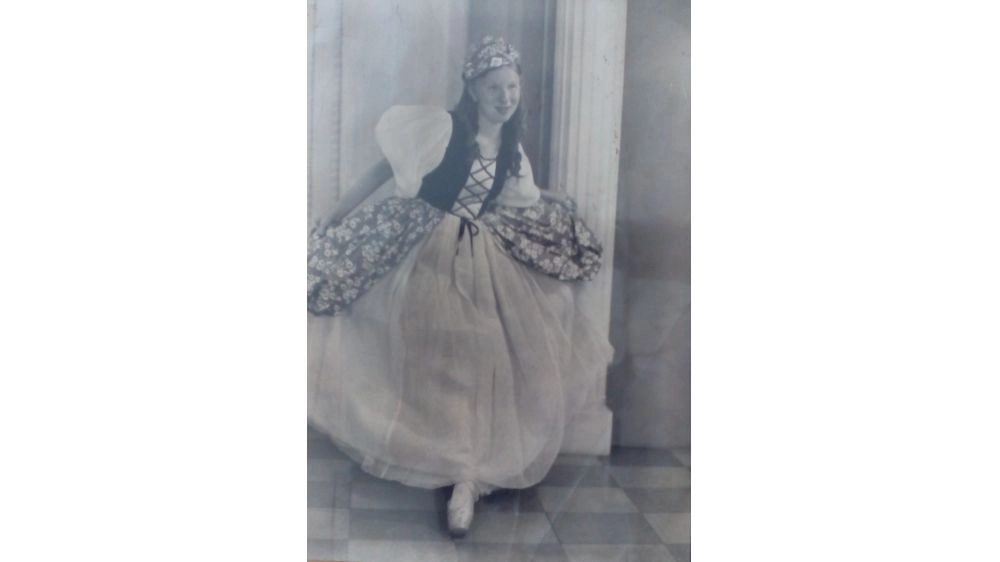
Listen to this Oral History
Description
Listen to cousins Shirley Cohen and Abe Soroka reminisce about their fond memories of growing up in Lachine, and learn more about Lachine's small Jewish community in the early-mid 1900s.Transcription
(0:00 - 0:09)
Shirley's mother came over. An uncle of ours didn't want to go to the army and ended up here. He brought Shirley over.
(0:10 - 0:14)
No, Shirley's mother. Shirley's mother. She was 15.
(0:14 - 0:19)
She came all by herself from Belarus. Belarus. Belarus. White Russian.
(0:22 - 0:33)
And she eventually married a Miller, another Miller family. Not the same as his family. And then they brought my father over.
(0:34 - 0:43)
My father brought my mother. And then my father brought some nieces and nephews. Every blood man.
(0:43 - 0:55)
Did you hear of every blood man? They have a building out of here. So he's my, his mother and I are first cousins. My father brought his mother over.
(0:55 - 1:02)
So that's how we ended up in Lachine. And my father was a dyer. Dyer. Dry cleaner.
(1:02 - 1:07)
Dyer. And he was trained in Europe. And then he came to Montreal.
(1:07 - 1:17)
Machine, dyer, and dry cleaners. That's right. And he worked as a dyer for the people dyeing clothes.
(1:17 - 1:25)
And then he opened his own factory. And he had a whole, he had a three-story building. And my father was quite successful.
(1:26 - 1:33)
He was quite, what do you say, resourceful. But he was good. Yeah, he was good.
(1:33 - 1:41)
He had the cleaning business and the dyer business, like, you know. Yeah. We used to, my mother used to go to the market and buy a live chicken.
(1:42 - 1:49)
Sure. And a shochet would come, we had a rabbi, come to kill it. And once he didn't do a good job.
(1:50 - 1:58)
And the chicken didn't die. And she went to flick the chicken because that's what she did. No, I don't remember that.
(1:58 - 2:09)
The chicken was running around with his throat split. But he still wasn't enough to kill him. So that was one of the stories.
(2:10 - 2:31)
And then she had to open the chicken, clean it, and sort of like burn off the feathers. And also, another story I have here. Our parents, when they came, they made their own wine and made their own pickles and sauerkraut.
(2:32 - 2:38)
And my father used to make wine. And he was a business in Lachine. He was in a close community.
(2:39 - 2:55)
So he used to bring a bottle of wine to the mayor each year. And to the chief police. And so he'd make the wine and get whiskey bottles and pour it in and deliver it.
(2:55 - 3:02)
That was a big deal. But then later, he stopped making the wine. But he wanted to continue with the delivery.
(3:02 - 3:15)
So he used to buy gallons of Brights wine. There used to be a Brights winery in Lachine. And he'd pour the wine into old whiskey bottles and still deliver it to the mayor.
(3:16 - 3:26)
The telephone, do you remember? Oh yeah, the telephone. The first telephone we had was a box on the wall with a receiver. And it was a party line.
(3:27 - 3:48)
So if you wanted to call, you either heard the party line or you had to wait until they got off. And eventually, we got telephones. And because my father was in business and he dealt with Montreal, he was in the cleaning business, we had a direct line to Montreal.
(3:48 - 4:02)
Otherwise, if you called from the regular line, it was long distance. It was 10 cents. And you'd have to... And the baker, remember Jack Koppelhoff? He used to come to our place and call.
(4:03 - 4:16)
He stocked baking machines as well. So he'd call Montreal and give his order every night. He came to my father's place and gave his order, brought it in, and delivered the kosher bread.
(4:18 - 4:30)
I also have a little personal story. I went to Lachine high school. And every year, each class would have a sleigh ride.
(4:31 - 4:42)
That was a big event. Normally, they'd serve a hot chocolate or something. But our class decided to serve hot dogs.
(4:43 - 4:53)
Oh, yeah, yeah. And the girls came over to me and said, Abie, I know you don't eat hot dogs, and you made a special. That was very nice.
(4:53 - 5:11)
That's right. I mentioned here also, we did have a Hebrew teacher who came twice a week from Montreal and taught us how to read. But nothing else, no Talmud, no... So we're really not... What about your Bar Mitzvah? Yeah, that's it.
(5:11 - 5:15)
That was for the Bar Mitzvah. That's it. Well, I had one year.
(5:15 - 5:25)
I remember we had someone for a year and learned to read and write. And that's it. Read Yiddish, write Yiddish or write Hebrew.
(5:26 - 5:37)
And a few little things, but that was it. Everything else was by osmosis, I'd say. We didn't really have a Yiddish... Like a real, like, you know... Study of the background.
(5:37 - 5:45)
Yeah. But we had it from the house, though. After, what really the car is all about.
(5:46 - 5:50)
Well, we were religious in the house. That's it. We were.
(5:50 - 5:58)
His mother and my mother. That's why the girls knew I wouldn't need a hot dog, because I was kosher. Yeah, no, we were very kosher in the house.
(5:58 - 6:04)
I mean, my mother wouldn't let me do any cooking. In case I'd mix the milchadik and fleishadik. That's right.
(6:04 - 6:15)
You know, and we had even dish towels. The long one for milchadik and the short one for fleishadik or vice versa. I mean, it was very, very strict in the house.
(6:15 - 6:25)
And we observed everything. So we knew the rules and regulations. But the reading and, you know, more depth we didn't know, because we weren't taught.
(6:26 - 6:37)
And remember Chanukah? I used to sing the Chanukah lech. I used to recite the Chanukah songs in shul. We had Chanukah parties a little bit.
(6:38 - 6:43)
But, you know, little things. Like traditional. Yeah, but not, you know, not in depth, as I say.
(6:43 - 6:56)
Yeah. So, I also had a little story about the synagogue. You know, the synagogue was, like, there were some religious, more religious than we were.
(6:56 - 7:04)
The Rabbinoviches, the Schecters. And they always used to fight in shul. And at times it was even fist fights.
(7:04 - 7:18)
One wanted this rabbi, one wanted that rabbi. It was no different than our synagogue here in the land too. I also had a little story here that later on my father was president of the synagogue.
(7:19 - 7:32)
And there was a mortgage of $2,000. And we had a member, his name was Mr. Bonder. Bonder in Yiddish means, in English, means a barrel maker.
(7:33 - 7:48)
And that was his trade. And he made barrels for Seagrams. And I remember in the synagogue, and he said, oh, my best friend’s Sam Bronfman, we'll go see him.
(7:49 - 7:58)
We'll get him to give us the $2,000. We'll pay off the mortgage. So, my father and he went to see Sam Bronfman.
(7:59 - 8:14)
And Sam Bronfman said, are they seizing the building? Are they forcing you to pay? He said, no, but we'd like to pay off. He said, when you have a problem, you'll come and see me. Mr. Bonder was really disappointed.
(8:16 - 8:27)
We used to, we lived on 6th or 7th Avenue? 7th. 7th Avenue. And Montreal High, Lachine High was on 34th Avenue.
(8:28 - 8:30)
36th. 36th? Yeah. Yeah, 36th.
(8:31 - 8:39)
And we used to walk there. There was no such thing as driving or getting a lift. We walked back and forth, back and forth.
(8:39 - 8:49)
And we came home for lunch? Yeah, and we walked back for lunch, and we walked back again. Well, I would take a bike. I love to drive my bicycle, so I would go back and forth for lunch.
(8:49 - 8:57)
Yeah, eventually I got a bike. Yeah, at 11, I think I got a bike. Because I graduated early, because I skipped a grade.
(8:57 - 9:03)
Don't ask me which one. Second, third, I don't remember. So I was 11 when I went into high school.
(9:03 - 9:14)
So my mother got me a bicycle. I think she asked Mrs. Rosen, what should she buy me a bicycle? So Mrs. Rosen said, buy her a bicycle. They bought me a bicycle, and I loved it.
(9:14 - 9:25)
I went back and forth. I used to drive to Montreal. And another thing I just remember is, in the winter, we had skating rinks in the schoolyard.
(9:25 - 9:53)
And, you know, if it snowed, they had about 30, 40 shovels. And everybody in school got a shovel, and we could... So it was really more of a... Yeah, but also, you remember, beside our house, we used to make a skating rink? You guys used to do it. You and your brother used to, and my brother used to.
(9:53 - 10:09)
Maybe you two, I don't remember, but they used to clear it off, put a hose, and then it would freeze, and we'd have a skating rink. I remember skating there and doing my H there. Another thing is, in those days, they didn't clean the snow like now.
(10:09 - 10:29)
And we used to, on the sidewalks, remember? Mountains of snow and... Snowplow. Snowplows were pulled by horses. It was really... I think maybe compared to the shtetl in the old country.
(10:30 - 10:41)
Yeah. Now they lived together and made their own food. They sort of lived in their own little communities.
(10:41 - 11:02)
And as far as being Jewish, I just want to mention that I was quite an active and active in basketball and soccer, and I actually won the best sportsman award. Oh, very nice. So the fact that I was Jewish didn't hinder anything.
(11:02 - 11:13)
Thank you, Eric. I never really associated with non-Jews too much. They had their thing with us.
(11:15 - 11:26)
My father had one of the first cars on the street. It was a Chrysler, and it had the running boards on the side. Yeah, yeah.
(11:26 - 11:36)
And a big car. And we used to go to Windsor Beach on the weekend for Sunday. I remember.
(11:36 - 11:52)
We used to go to... That was like at Boudelaire, the other end. And we all climbed into the car like seven or eight of us. We had benches in the crib, and we went to the beach.
(11:52 - 11:56)
Yeah, we used to race. Your father and my father used to race there. That I remember.
(11:59 - 12:02)
Yeah. The good times. And there was a dance hall.
(12:03 - 12:18)
Anne used to watch them dance. Also, I mentioned the... You know, a big treat for the family was on the weekend, we'd drive to Montreal. Montreal was nine miles away.
(12:19 - 12:37)
And we'd go to a delicatessen, and in the back, we always lived in the back, and we'd have a big feast there. And that was our big... And there was a cheese store called GANS, G-A-N-S. You ever heard of that family? No.
(12:37 - 12:46)
They had a cheese store. And my father and my parents used to buy their Gaz, Gazerouille cottage cheese. In English, they called it Gaz.
(12:46 - 13:02)
So that was quite often we'd drive in to the big city. I also mentioned there's a bus now, goes from Montreal to Lachine, number 90. When we were kids, it was also number 90.
(13:02 - 13:06)
Yeah, 90. Sure, the streetcar. You couldn't take the streetcar.
(13:06 - 13:20)
It was a streetcar. And halfway, when we'd go around Ville Saint-Pierre, which is about halfway between, they'd come with a dog, so we'd have to put him next to... Next to fair. Because we had to pay for a long distance.
(13:20 - 13:24)
So it was really a separate community.
Disclaimer
Please note that the views and opinions expressed in these recordings are those of the interviewee alone and do not necessarily reflect the positions of the Montreal Jewish Museum, its staff, or its Board of Directors. These recordings are presented as personal recollections for historical and educational purposes. Individual accounts reflect the interviewee's personal perspective and lived experience, and have not been independently verified for factual accuracy.
These transcriptions and translations have been produced using automated transcription and translation tools, followed by human review. Despite this process, inaccuracies may remain. If you identify an error, please contact research@imjm.ca with the page link and your suggested correction.