
Listen to this Oral History
Description
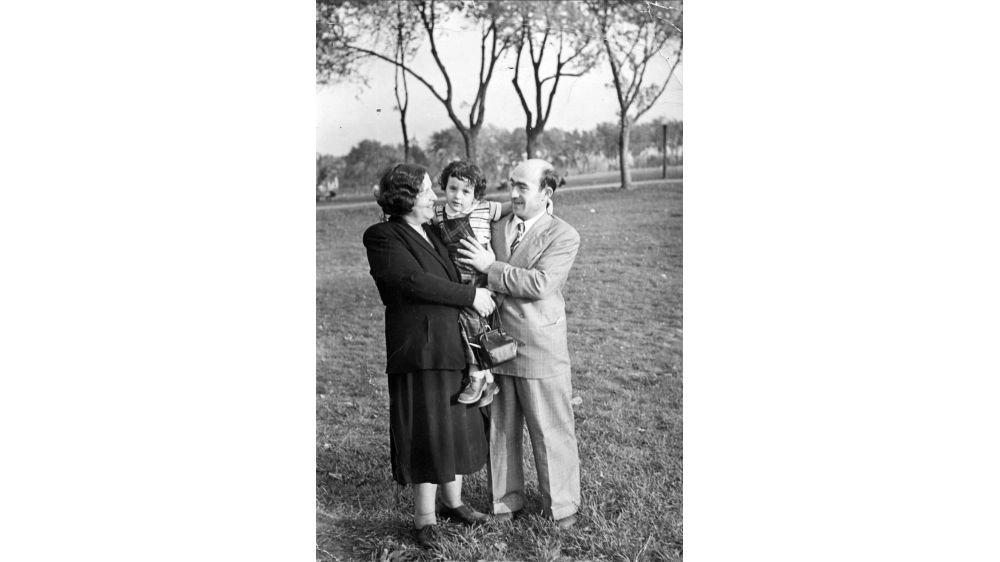
Listen to Miriam Isaacs reminisce about her childhood in Montreal while on a recent visit to the city. Discussing her family's immigration to Canada after surviving the Holocaust and the difficulties of settling in Montreal, but also remembering all the fun she had playing on the streets and running around Fletcher's Field, Miriam Isaacs paints a clear and nuanced image of her early life in the city. Miriam Isaacs is a Retired Affiliate Visiting Associate Professor of Yiddish Language and Culture at the University of Maryland College Park. She has also taught and lectured about Yiddish around the world and has published numerous articles about Yiddish language and culture.Transcription
(0:00-1:12)
So my mother came from a place called Solotvina, which is across the Tisza river from Maramureș Sighet, which is where Elie Wiesel came from. So in the Carpathian mountains somewhere. What was then, she was born in what was Czechoslovakia, which later became Hungary, and now is in the Ukraine.
And she came from a very religious family. My grandfather was a mashgiach and my grandmother ran, like an inn for traveling salesmen, and they were a large family. There were 10 children and lots of grandchildren.
And then like, you know, Elie Wiesel, 1944, came along and they wound up in Auschwitz. She worked in Ravensbrück and survived the war the hard way and wound up in a DP camp in Germany, where she met my father and where I was born. And my father came from Poland, from Galicia, and he was living in Krakow when war broke out and survived in Central Asia, in Kyrgyzstan, and joined the Soviet army and fought with them.
(1:12-2:17)
Then went back to Poland and found nobody left, so he wound up being part of a group of 26 former soldiers and partisans who helped smuggle surviving Jews across to the west. So he wound up in the same DP camp that my mother was in, and I was born there. And then the hard part was getting out of Germany because the visas were hard to get.
And my father managed to come over on this, what's known now as the tailor's visa. So, he sort of got wind of this visa to go to Canada and went and, you know, applied a few times. They had a test and he wasn't a tailor, he was an upholsterer, but someone else took the test for him and we got to Canada. We arrived in Halifax in ‘48. And he worked as an upholsterer in Montreal, kind of struggled, didn't earn much money. We lived down, what is now a trendy area.
(2:17-3:16)
In fact, I want to go look at the house tomorrow. It's right on Gilford Street between Drolet and Villeneuve. And it was a fixer-upper, somebody gave him cheap rent if he fixed it up, so we lived there.
But before that, my mother was very sick when we got to Canada, and she went to the Jewish hospital. And Dr. Penfield, who was apparently a famous neurologist, treated her, but she had all kinds of neurological disorders from having been beaten by the Germans. So she couldn't take care of me and my father had absolutely no money.
So they put me into foster care with this couple, Sophie and Leo Schaefer, and I lived with them from ages two to four. And then they were able to scrape up enough money to get not even an own apartment, but they couldn't have, like you have to have a down payment for an apartment. And they just didn't have that kind of money.
(3:16-4:15)
So, we lived with this nice man and his nephew, Friedman, until we got this fixer-upper on Gilford Street. And then we lived there until I was about 12, 13. And then we moved to New York City from there.
And I went to Bancroft School. And yeah, and actually, I loved my childhood in Montreal, because there was a lot of freedom. There were a handful of other Jewish families on our block, and I used to play with them all the time. And yeah, it was a pretty nurturing environment, calm, it felt, and relatively safe. Yeah, so we played on the streets. We were just kind of street kids. I did go to summer camp twice up in the B'nai B'rith, had this Wooden Acres. So a couple of times I went to the summer camp, and my mother once went to a camp somewhere up in Laurentian. So that was pretty special.
(4:15-5:02)
She liked, I think, the camp better than I did. I actually preferred playing on the streets with my friends to the summer camp, which was, I don't know, I didn't relate well to nature. It was full of mud and leeches and rain and stuff. [chuckles] I was really an urban kid. I guess I was homesick too.
Yeah, and so yeah, we weren't religious. My mother would occasionally take me to shul with her, and I think it's the shul that there's some kind of special thing about soon. It was an orthodox shul, and I remember the men downstairs talking with each other and the women upstairs; my mother, beating her chest and weeping, and the kids played in the courtyard. That was synagogue.
(5:02-6:04)
Other than that, it was really the Jewish library that was then on Esplanade and Mount Royal that I learned to read and learned to love reading at. So I'm sitting here now, and to me it's just an amazing thing because I remember I had read everything I wanted to read in the children's department, and I pleaded with the librarian to let me take things from the adult department because we didn't have many books at home.
We didn't have money for things like that, but we were always at the library. My father was a big reader, and he read Yiddish books. He always had a newspaper or a book in his hand and a cigarette usually too, but my strongest memories are really at Fletcher's Field where all the Yiddish people would sit on the benches under the cross and talk about politics or their lives or just chat, and it was mostly in Yiddish, I think all in Yiddish.
(6:04-7:35)
I was telling somebody this morning, there was this one guy named Soboveichik, and he always had a bag of peanuts. He was cracking peanuts. He was kind of small and bent over, and my father once told me that there was some, he was, I don't know if he was depressed or just kind of a little bit different because he had lost a daughter and never could quite deal with that, so I remember him especially. And the others were just grown-ups, you know, so I don't, I didn't know their names.
But I loved Montreal. I do still love Montreal. We went to the Rachel Market and got our kosher chickens, and it's a real Jewish life. We really were part of the Jewish community and had a kind of home there, and my father went to work, so he was in a shop with other workers making sofas and chairs better, you know, fixing them up, and some of the people he worked with were nicer than others.
The bosses were pretty exploitative, you know, they would hire people and not give them time off for vacations and then fire them and put them on social security and then rehire them. He had his struggle just, and we earned here something like $1.75 an hour, you know, barely made ends meet, but then his lifestyle wasn't especially fancy, you know, so we lived simply, which I'm grateful for now. I still live simply, and I prefer to live simply.
(7:35-9:35)
If I don't need things, I don't buy them, you know, and I don't do that. My mother, I think, was quite lonely. I know she was very lonely. She was a very sociable person. She never learned English as much as my father did because she was at home. She was too sick to get jobs. She tried working as a cleaning lady for a while. There's a couple of good stories for you.
Job number one that I know about, she worked in a kosher hot dog factory and scrubbing the floors and stuff, so she had an ammonia-soaked rag that she was washing the floor with that accidentally fell into the meat bin, and they didn't do anything, they just served that became part of the hot dog, so I never was allowed to eat hot dogs after that. That was it.
Another time, it was a kosher restaurant. She was stirring the soup, and there was a rat in the soup. They pulled out the rat and served the soup [laughs]. So, she never let us eat in a restaurant after that, so she cooked really well at home, and, you know, we lived kind of out of the way. Sometimes missionaries would come to us, and she was so lonely she'd invite them in and then give them tea, Jehovah's Witnesses, and she'd keep, you know, they'd chat. She'd be happy. They'd be happy.
No way she was ever going to convert, but they gave her, and there was this Jesuit priest used to come by and bring me postage stamps, but otherwise, she did her, you know, housewife thing and shopping. And there was an old Italian woman named Mrs. Manetta who used, she and her daughter, they used to sit in a kind of cubby area of their house and make carpets out of old nylons. You know, they'd braid them and then sew them together for these round things, so sometimes we'd go over there, and she'd chat with Mrs. Manetta.
(9:35-11:06)
There was an old woman, an old French-Canadian woman who we all called Grandma, who lived across the street, and she taught me how to knit, and she was very friendly. Other than that, I think my mother really didn't have very much of a social life. She'd cook. My father would come home every day at 5:30, we'd have dinner, we'd go out for a walk, and then we'd go to the benches. And at the benches is where she really could chat with other women. Yeah, at Fletcher's Field on those benches.
I noticed this morning there are fewer benches now than were then, the tennis court wasn't there yet then, and we'd all sort of sit there under this cross, you know, just socializing. I would run around with the other kids, and the grown-ups would talk, and then we'd walk home and watch the news on TV, and go to sleep.
It was actually a very stable kind of childhood. I'm going to go soon, back to our house on 364 Gilford Street, because we only had the top flat. Three or four families lived in that house. Now it's a one family place, and we had this exterior staircase that I sometimes had to shovel the snow off of. And there was a balcony that went around it, and it sagged. My father at some point got a big two-by-four and hoisted up the balcony with his two-by-four, and the last time I looked, it was still there. I'm going to go check on that, see if it's still there.
(11:06-12:26)
And it didn't have any heat. It had, you know, we had a little sort of stove in the center room, and then we sort of, probably a fire hazard, big time. These pipes that led out the window that gave us heat. I think they had central heat once a week, so that was the day you took your bath, and there was this old Italian guy named Lazar, Lazarus Lazar, who would shovel coal into the stove, and I remember enjoying watching that.
We didn't have a refrigerator, so this ice box with this poor ice man with his tongue dragging these things up three flights, yeah, and milk and eggs got delivered by horse and wagon, and the horses would drop their droppings, and then we'd have all these little sparrows. And then when the horses went away and trucks came along, the birds disappeared too.
I'm very happy here right now. I'm always happy here, but especially now, I found that people I've talked to, I've been so sympathetic, and nice, and intelligent, and yeah, so yeah, my grandson wants me to bring him here, yeah.
Disclaimer
Please note that the views and opinions expressed in these recordings are those of the interviewee alone and do not necessarily reflect the positions of the Montreal Jewish Museum, its staff, or its Board of Directors. These recordings are presented as personal recollections for historical and educational purposes. Individual accounts reflect the interviewee's personal perspective and lived experience, and have not been independently verified for factual accuracy.
These transcriptions and translations have been produced using automated transcription and translation tools, followed by human review. Despite this process, inaccuracies may remain. If you identify an error, please contact research@imjm.ca with the page link and your suggested correction.