
Listen to this Oral History
Description
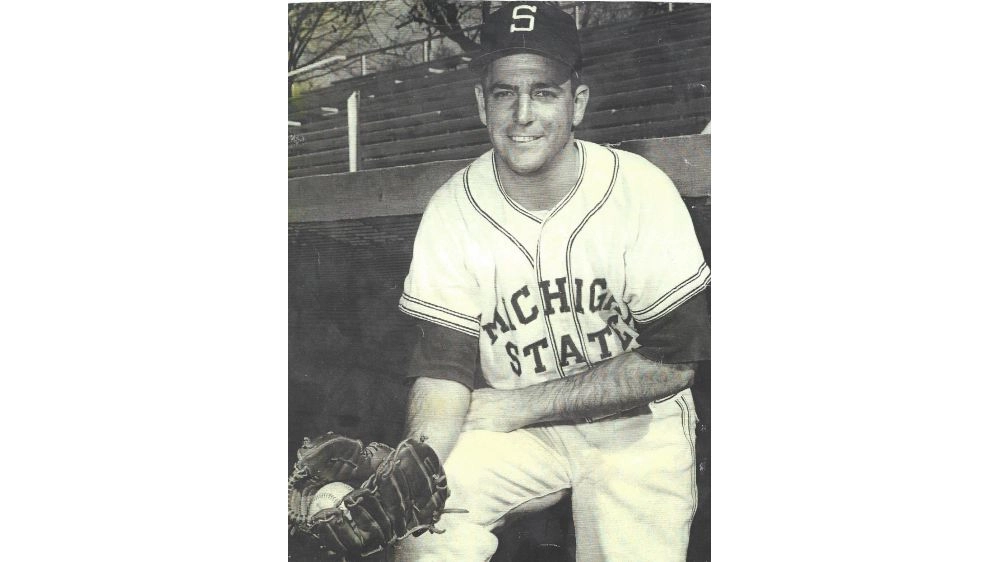
Listen to John Elias discuss his professional baseball career and his elite baseball academy, which was located in Cote St. Luc. John Elias was born in Montreal in 1941 and grew up in the Snowdon and Notre-Dame-de-Grace neighbourhoods. John’s infatuation with sports began at an early age, and he quickly fell in love with both hockey and baseball. His skills in baseball, specifically his strong arm, made John one of the best lefty pitchers in the city. After graduating from West Hill High School, John attended Pasadena City Junior College in California for two years before accepting an offer to play college baseball at Michigan State University. After graduating from Michigan State in 1962, John had the opportunity to play professional baseball in the Baltimore Orioles and Kansas City Athletics’ farm systems. Following four years playing professional baseball in the United States, John returned to Montreal, where he pitched for Granby and later Trois-Rivière of the Quebec Provincial League. Once his professional baseball career came to an end in 1970, John became a teacher and successful basketball coach at St. Pius X High School. His passion for baseball did not end with his professional career. John was a batting practice pitcher for the Montreal Expos throughout the 1970s. In addition, John opened up Grand Slam Baseball School in 1970, Montreal’s premier summer baseball academy at Wentworth Park in Cote St. Luc. John’s connections with the Expos organization allowed him to bring on daily professional guest instructors. Expos’ legends such as Gary Carter, Steve Rogers, Bill Lee, Andre Dawson, Tim Raines and Pedro Martinez were some of the many players to instruct campers at Grand Slam. Following more than 25 years of successful summer sessions, John sold Grand Slam in 1997. In addition to running Grand Slam, John was named the head coach of McGill University’s varsity baseball team in 1994 and ran numerous practices for local baseball organizations. Even into his 70s, John has continued to play an important role in Montreal’s baseball scene.Transcript
(0:00 - 0:40)
Well, I went to Provincial League for a while and then I had relatives in California and they invited me to come down there and I went to Pasadena Junior College. So I pitched for two years for Pasadena and I had good results and there was some interest and then all of a sudden I came back to Montreal; there was a guy who was a hockey captain at Michigan State and he heard about me, called my mother, said “I'd like to talk to John, maybe he's interested in going to Michigan State.”
(0:40 - 1:16)
I had, I would call it average, average results, you know? I win a couple of games, I lose a game, you know? But we had a chance to travel, you know? Instead of, well we used to say we traveled in the bus, on a bus and slept in a brush — but it wasn't that bad really, you know? We enjoyed, I enjoyed playing there. John Thurman was his name, he's an old-timer. He'd been around for 30 or 40 years when I was there.
(1:16 - 1:44)
The minute I would go up to warm up, I was one of the starting pitchers, I'd look over my shoulder, I thought there was a guy in a bullpen. I said, what's going on? So I go up to him one day and I said, “John, what?” He says, I can't watch you pitch, you made me wear out four pair of britches, you know? He was a real country guy, old guy.
(1:44 - 2:35)
I said, what do you mean? Man, you're three and two, you're walking guys, you're striking out guys, killing me, you know? So, but he pitched me, I was in a rotation. But I remember a lot of those stories, you know? And we had, that's the first time we had a chance to travel, you know? Minnesota, Wisconsin, North Dakota, like, where, Illinois, Indiana, you know, traveled all around the Midwest. Well, Baltimore, there was a tryout camp in Springfield. No, it was in East Lansing.
(2:35 - 3:37)
Yeah, and I went to the workout, and I worked out for them, and they signed me to what they called a contract where there was nothing promised in terms of a yearly, year contract, it was like a month by month. And I pitched for them, and then the following year, I was contacted by someone from Kansas City, the athletics, not the Kansas City now. And they invited me to a tryout, and they gave me a little bit of money.
(3:37 - 4:30)
I think it was $1,500. For me, it was a lot, you know, I never got any money. And so they sent me to, well, it was the Florida State League, then I went to the Carolina League, then I went to, where else did I go? Northwest League. That's what I said, I mean, I made the rounds of a lot of different locations, and finally got released, you know? And then I came back to Montreal, tail between my legs, you know? And said, shit, I can still pitch, you know? I was still young, and that was it.
(4:30 - 4:52)
So I continued in the Provincial League here, which was a very good league then, because they had opened up, it used to have, they were only allowed three imports that were not Quebecers. All of a sudden, they opened it up to unlimited. Well, now the flooding of guys from the States happened.
(4:52 - 5:54)
The league really came up to about a double-A level, which was a strong league for what they considered was an amateur league, you know? But the money was good, and I had a deal in Granby where I had a little salary, but I had a bonus for wins, and I would pitch every third game or fourth game. And I won 17 one year, I think I won 21 year, or 18. And then I think I played with them four or five years.
Interviewer: So after playing in the Senior League, what, just to get into the part when you worked with the Expos as a batting practice pitcher, how did that sort of come about, and what was your...
(5:54 - 6:29)
Well, there was a guy who was hired by them. He's still with the Marlins. He was hired to be a clubhouse guy. And I guess they were looking for a batting practice pitcher. And he said, well, I know this guy, Johnny Elias, you know? So they said, bring him out. So there I was at Jarry Park throwing batting practice, you know. And it grew from there to, you know, the Olympic Stadium, certain guys that knew me from, you know? Being in baseball.
(6:29 - 7:08)
So I played with the... I pitched batting practice with them probably eight years. And then the idea of having a baseball school. Harold Cammey, who is still with the Côte-Saint-Luc Recreation Department, because I did play one summer at Town of Mount Royal, part of a summer. And he said, “John, you know, you're living in our community. We've got a beautiful facility. Why don't we have a talk?” So I went over with him and I looked at the facility.
(7:08 - 8:01)
I said, geez, I won four diamonds, you know, close to home. And everything made sense. So I dropped being in TMR the one year I was there. I had four diamonds, which gave me an opportunity to have four different age groups. I had 7, 8, 9, 10, 11, 12, 13, 14, 15, and the 16 to 18s. So I had four different age groups. And I was able to latch on to guys who had had some baseball background in playing. And some of them had done a little teaching, but mostly I had to, kind of, guide them into the instruction and what we wanted to cover.
(8:01 - 9:07)
So the mornings were basically instructive, where the kids would work on skills. The players would come in in the morning, usually at nine, and stay till noon. And I would have them go around to the four different groups, talk to them, answer questions, and demonstrate. Players came and went, but I mean, being there in the early years of the team, you know? The guys who were there were, like I say, Crowe Marty, and Dawson came along. And my mind isn't sharp to remember all of the guys that came, but everyone that I invited basically was happy to come out. Why? Because they had children. They would bring their kids over, drop them off, and I put them in their groups, you know?
(9:07 - 10:10)
And they would come back around two or three o'clock, pick their kids up. So it was like their way, I mean, once in a while, if I felt a guy could use a little cash, I'd throw him a hundred bucks or, you know, something like that for coming out. But basically, the fact that their kid was coming out, having a good time, so it spurred the school to a point where every year was filling up right away. Like by April, April I was filled for, and my, you know, my sessions would start in June, June and July, and August. And I had three sessions, three sessions every month. And I would get the expo schedule, and I would see when they're in town.
(10:10 - 11:39)
So, you know, and I would set up my three weeks. I never, I might have gone four weeks once, but most of it was three weeks. Guys that liked talking to kids were very popular. Other guys were kind of a little close-lipped a little bit, you know? And they were a little shy to talk. And, you know? I could hear them almost stuttering a little bit, you know? But most of the guys, you know? Bill, Bill, he was amazing. He had guys rolling around and doing different things, and he came every year for me, pretty much. And probably eight or ten of them, when they were with the Expos, willing to come. And even Pedro, you know? In his broken English, he made a talk to the whole group, you know? About religion and importance of, you know? Be in touch with God. And, you know? like he did things like that. And I mean, it was really, and the kids were listening, you know?
Interviewer:Even though you would say most of the campers were probably Jewish people.
Yeah, that's what they were. They would still be very much into Pedro's religious talk. They wanted to listen, yeah, because they were hearing it from a major leader.
(11:40 - 12:15)
Having good instruction. Like, I never wanted a babysitting service, you know? And, you know? Just kids crying and whining around. We had a couple of injuries. One kid, uh, one kid got hit, yeah, in his, uh, in his tooth. At that time, his tooth repaired. But it was his fault, because I told him at noon, all play and instruction shuts down for 30 minutes to have your lunch.
(12:15 - 12:45)
Ninety percent of the kids were from the Côte-Saint-Luc area or Westmount or West Island, you know? So, and their parents would bring them in and take them home. So everything, everything was perfect. But I got to a point, like I say, it's 10, 12, I don't know, it could be 15 years now, but I just felt like I've gone as far. It's been successful. Grand Slam was known by everybody, you know?
(12:48 - 13:41)
And, uh, that was it. So, uh, uh, I mean, when you had good guys like Bill Lee coming out, you know? And guys like that were coming out and spending time with the kids, and I had either one or two players would be out every day to visit the kids, talk baseball, instruct. So it wasn't babysitting, you know? Well, kids started to go away, you know? Parents would take them away for, to country places and that. And it started to cut in a little bit to the, uh, easily filling up the 100 kids. The last couple of sessions, I remember having, uh, 65, you know? 70, where it was, I was used to always having 100.
Disclaimer
Please note that the views and opinions expressed in these recordings are those of the interviewee alone and do not necessarily reflect the positions of the Montreal Jewish Museum, its staff, or its Board of Directors. These recordings are presented as personal recollections for historical and educational purposes. Individual accounts reflect the interviewee's personal perspective and lived experience, and have not been independently verified for factual accuracy.
These transcriptions and translations have been produced using automated transcription and translation tools, followed by human review. Despite this process, inaccuracies may remain. If you identify an error, please contact research@imjm.ca with the page link and your suggested correction.