
Listen to this Oral History
Description
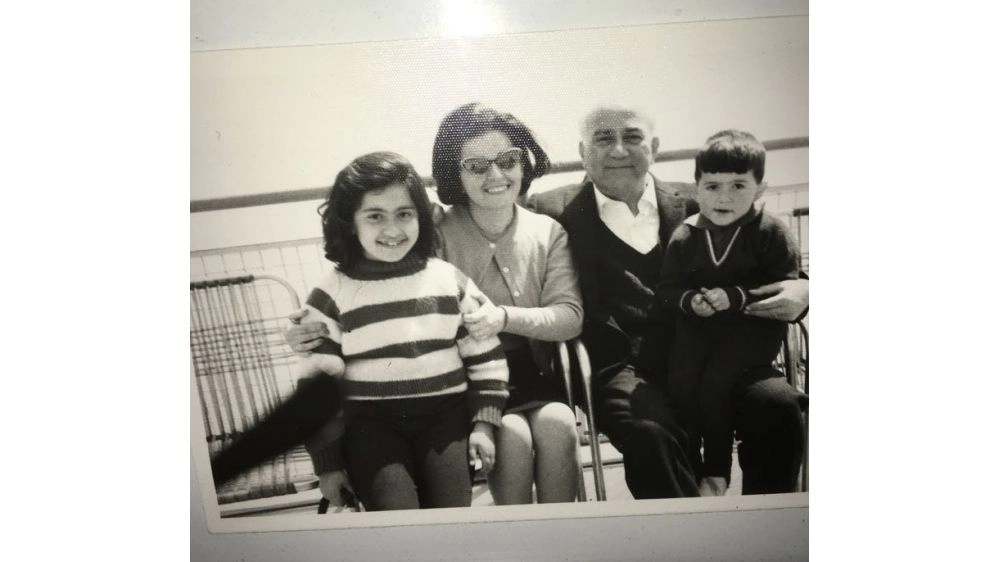
Listen to Sandra Benjamin share her story of feeling her home in Baghdad and ending up in the Montreal suburb of Mount-Royal.
Transcript
(0:00 - 1:02)
So my name is Sandra Benjamin, and I was born in Baghdad, Iraq, 1958, October 9th, the 8th, and I lived there until, I was there until July 17th, 1971. That was the span of my life in Iraq, at which point I grew up, I had a really nice childhood, I lived with my parents. Everybody was wonderful, we lived in a Jewish neighborhood, but still we were surrounded by all kinds of other people from all kinds of, and we had Armenian friends, we had all kinds of friends, Muslim, Armenian, you name it, we had it, but we were always wary of the surroundings, you know, that we know we're a minority and that, you know, we had to be careful. So as the years went by, in the beginning it was like, heavenly good, everybody was well-to-do, especially the Jewish community, because they were well-educated, mostly they were entrepreneurs, and they did well for themselves, and slowly, slowly things started changing.
(1:02 - 3:53)
When I was born, it was actually during the revolution, from the, over to the king, so what, when, like, the day I was born was, like, in the revolution, so I was like, wow. Anyway, so then it became a different government, no longer a king, and things worsened as the years went by, and I, my mom was born actually in Palestine, like, her parents are Iraqi, but they left, they left in the 20s, and they went to, well, Palestine at the time, before it was Israel, my mom was born there, and then she, they moved to Beirut, which is in Lebanon, because, for business reasons, and so my mom grew up in Lebanon. And finally, when she married my dad, they were matched up, and she got married in Lebanon, and they moved back to Baghdad, Iraq, which is where my dad was based, so that's why I was born in Iraq, but what I wanted to say about my mom is that we had to, we were traveling a lot to visit my grandparents in Beirut, the first four and a half years of my life. So we traveled a lot, and my brother actually was born in Beirut, I have one brother. So the last time we traveled was 1962, sometime in the summer, and when we got back in 1963, it was no longer allowed for Jews to leave, ever, like, you could not go. So we were, like, locked up in Iraq, and maybe a couple of families managed to somehow, through bribery, whatever you want to call it, somehow manage, and had, like, some special friend that allowed them to leave, but the rest of us were all locked up, and from 1963 onward to 71, it got worse and worse and worse progressively. So in 1968, that's when the Ba'ath party overthrew the president at that time, and so he fled from his life, like, he just ran away, because he knew they were going to do that. So then they started actually coming to your house, like, at any time, day or night, and basically taking the husband, like, at random, and just saying you're wanted for questioning, and, you know, you're a spy of Israel, and on and on and on, like, making up stories. And then throwing the people in prison, the husbands, and then basically coming in, like, a day or two later, and telling the wife, come and take the body, so they would torture people just like that, their reason is we're spies, but we're not. So what they did around that time, they cut off all communications for as possible, so they cut off our telephones, they did not allow us to leave the country, they froze all the assets, like, if you had real estate, you couldn't really do anything. They were beginning to slowly, slowly not let you work, if you went to university, you're not allowed to go to university anymore. If you belong to a social club, you're not allowed to go there anymore, so everything was, like, just closing up, and life became like impossible.
(3:53 - 5:36)
So all you saw, what I saw at the end was, all we did was, my family would, we'd have to travel to another family's house, because we can't call them, and try to see how they're doing, or vice versa, so we had to just basically go to each other's house to see how we're doing. But while we're going, we were being followed constantly, because someone was, like, following us. You know, so we were, like, under control, like, the whole time, so in our case, we actually had 24 hours, somebody in front of us, so it's by shift. So that's when we finished this shift, someone else would sit there. So they would sit, like, at a cafe in front of our house, they'd play domino and backgammon all day long, and drink coffee and tea, and whatever, with their friends. And then the next shift would come, so they know how, how often we leave, they follow us, where do we go, how long we stay, who comes over, they know everything, so it was impossible, even if you try to escape, it was, like, impossible, because you can't take anything out, they're gonna see. So it was like this for a while, and my dad became, like, obsessed, and he would, every night, basically, put on his suit and sit and wait for them to come and take him away. It was like this, and we'd plead with him and say, listen, like, don't, you know, like, relax, just put on your pajamas, please go to bed, and, like, it would be impossible. He'd say, no, at least this way I have clothes, I don't know, I don't want them to come and grab me in my pjs, and then I'm gonna, I don't know what's gonna happen. So it just became, like, everybody became neurotic, and all you talked about is about how we're gonna get out, how, what's gonna happen to us, we're all gonna die, it was just, like, all the time black. So from, like, totally rosy and wonderful to totally black and, like, end.
(5:36 - 7:45)
So somehow, and we still don't know the full story, because my parents never wanted to talk about it. But somehow they managed to, over years and years and years of plotting and trying to figure out how the heck we're gonna get out of there. And they knew, you can't take anything with you, there's no way, you're gonna leave as is, with your skin and clothes on, that's it, so they plotted and paid some people off to get us out. And so in 1971, it was a national holiday, so this was like a, like a, let's say Montreal Canada Day. So everybody's, like, rejoicing and having fun, so it was a little bit less, you know, we're not being observed as much as usual. So people are, like, happy in the street, jumping around, whatever, so they picked that day, so while people are busy doing that, at least we can kind of sneak out, and even when we did sneak out, we didn't leave, like, all together, all of us, so it doesn't look like, oh, the whole family leaving together, where are they going. So I'm really giving you, like, a major synopsis here. So we left, my mother and I and my brother, we left first, and we took a cab and went, we were, like, in a Jewish neighborhood, so we went downtown, which is, like, a mixed neighborhood, mostly Muslim. And we went to my dad's uncle's house, we lived in that neighborhood downtown. So we went there, and we're waiting for my dad to join us there, and then my dad joined us, he took a cab later on, and then he came and joined us, and all of us went to the train station, which we're not even allowed to be on a train, plane, automobile, nothing, like, it has to be, like, we're just walking basically all the time, even in a cab, we're, like, wary of people, because they're wondering who the hell we are, anyway. So we ended up going on a train, so this was on the 17th of July, and then we were with three other families, so everybody basically together, that was the plan, to go through the northern part of Iraq, which is Kurdistan. So we're supposed to take the train, and to get off at Mosul, there was no more train or anything, we would take cabs and keep heading out to the border of Iran, basically.
(7:45 - 8:46)
And from there, we would be hiding in a cemetery for, like, a few hours, so nobody could see where we are, or who's there, because if they know there are Jews up there, definitely, we're not supposed to be there. We can't even leave Baghdad, which is the capital, so we can't even go to another province, so to speak. So that happened, we went there, and then we got driven to the Kurdish headquarters. It's Barazani, who's the guy who's in charge, he's the mullah there, and so he has his own, basically, own people, and own army, and own everything, and we got out there to meet with his son, he wasn't there in person, but his son. And his son basically said to us, we're letting you leave, because Israel helped us with arms to protect ourselves. And because of that, we're letting you leave, but don't tell anybody, because then they're going to come after us, and so that's how we ended up escaping, basically, in a very small nutshell.
(8:46 - 10:18)
Now in terms of details, I can go back to my childhood, and tell you that we went to this school. It was a Jewish school, my brother and I, so everybody went to that school, there were two Jewish schools in Iraq, really great schools, my school was called [unintelligible]. So I grew up there, in the good days, like, let's say, well, the good days, I mean, 63 wasn't great, but it wasn't bad yet. It was starting to get worse, you know, we'd have parties, like what I see of my parents, they were always having parties, people over, and it was an open house, you know. This was how our community was, everybody, you don't have to call and make an appointment to come, you just come in whenever, and it was wonderful. They were really loving parents, we had all a strong connection, so it was a very close-knit community, the Jewish community. We went to synagogue, but then again, we were beginning to get scared to go there, because, you know, but one thing is, no mezuzah on the door, nothing Jewish showing from the outside, nothing, they knew we were Jews, but nothing, so if you have a mezuzah on your door, they're going to burn your house, basically. So my parents' pictures of their marriage, anything under the, the star of David, had to be, was torn and gone. Up until the age of about, let's say, seven and a half, eight, things were pretty normal.
(10:18 - 12:08)
And then things were like, I can tell, once my parents were fired the help, and once, you know, everybody, no phones, I mean, I could tell it was like scary, it was this dark cloud looming over, like suddenly, Uh Oh, you know. And then they're telling us all the time, don't talk to anyone, don't say anything, if the teachers ask you what are you doing at home, don't say anything, don't do something. And I can distinctly remember, my brother, one day, because he was in like a nursery in the same school that I went to, that one day, I walked in, because he was causing trouble in the class, and they said, you know, call me, go down and see your brother, see what's going on. I go there, and the teacher was asking him, his name is Ronnie, “Ronnie, my boy, you know, you're such a good boy, so did your parents buy new luggage, what, what, what, tell me.” So that it was like this, and I freaked out, and when I went home, I told my mom, I said, you know what, they're going after the kids, and they're asking them things. Because they're innocent, and they want to talk, and of course, they're the teacher's pet, so they want to tell it all, right, so, so it became like really apparent, that you can't. School anywhere, you have to be careful, and for me, I learned to grow up really fast, even though I was still like a kid, I knew that I was, my life was in danger. I could feel it, and so I really had to, that's what I'm saying to you, I was looking over my shoulder. I was not trusting anyone anymore. I was afraid of people, you know, of course, I trusted my friends, different, but anybody who's outside our community, was like, right away, you can't trust them. No matter what, even if you knew them, like for years, it was just that kind of feeling, when you go to the store to buy something, you're always like saying, yeah, they're looking at us, they're looking at us.
(12:08 - 13:30)
It's them and us, it was like us and them, and them and us, like that, the whole time, you couldn't be, you were nice in your daily activity to them, being very civil, but in your heart, you're like shivering and shaking inside, not knowing what they're going to do. What could they possibly do? That was the feeling all the time, so from like eight onwards, I left with twelve and a half, so I'm telling you, four and a half years, out of twelve and a half is a lot, right, it's like a third of my, more than a third of my life, already living in fear, there, so. And even among us, like with my girlfriends, we were talking about what our parents, like, oh my god, you know, what's going to happen, what if your dad, like, you know, and for me personally, I used to be worried, like I had to make sure that my dad, I could see my dad actually going to bed, before I went to bed. So I'd never go, and I told you, like he would be sitting in his suit, waiting for them to come and get him, it was neurotic. I would make up all kinds of excuses, like I'm thirsty, I'm, I forgot my homework, I don't know what. I would make up all kinds of excuses not to go to bed, just to make sure that I wanted to see him in bed, it was like mothering him almost, in a way. You know, like as if I have to be the mother, even though my mother was my wife, that we all had to mother him to make sure that he's in bed, packed away and everything is good, then we went to sleep. That's how crazy it was, so I had to grow up.
(13:30 - 16:06)
Now, about escaping, so the day of the escape, I can tell, like my parents. We had two parts of the house, it was like part of the kitchen and the, you know, ironing room and blah, blah, blah, and then the other part where we had our living room and our living quarters, the bedrooms. So my mom said to me, because by then we had to learn how to cook and clean and everything, she said to me, I want to make this accomplished dish, and I can tell my parents were in the living room and they were discussing things with, I don't know who, somebody. Anyway, so here I was and I was banging on the door, I know what you're up to, I know what you're up to, I want to go, I wanted to tell my girlfriend that we're leaving, you can't do this to me, I'm never going to see my friends anymore, I'm so mad at you, on and on and on, so I was pounding the door, and I know you were like locking me up because you're doing that. And my mom said, well, just, yes, we're doing that, but you just have to stop, stop it, stop it, and you know we can't tell a soul, right. Because in my mind I was going to run up to the balcony, like it's a big terrace, and usually like my friends would, like let's say some of them after school would pass by together to go to their house, so they're passing through our house, like in front of our house, and I could wave at them and say, you know, sign language, tell them something. But meanwhile on the other side, like right across the street, there's people watching, so my mom knew, like, are you crazy, you can't do that, anyway, so they really kept everybody inside. And when it was time to leave, they opened the door, and I had like a really nice songbook that I had. Songs of like artists that I really liked, I wanted to take it with me, and she said, we're not taking anything. My mom freaked out, nothing, we're just coming as is, and I'm like, mom, I want my songbook, I'll never have it again, no, you cannot have it, so you just have to nag me. And we always, she said, now when we get up, you smile, and you pretend nothing is going on, just like that, that's it, you just laugh, because because they're watching, you cannot take. You cannot sell your good Persian rugs, and all your silverware, and your beautiful gold jewelry, you can't take that, anything with you, you cannot take, my mom took her wedding band, maybe a couple of things on her that she could wear and hide underneath. But we left the way we were, because we have to look normal when we're in the street, we're going shopping to buy, I don't know, apples and oranges. They're watching us, and plus, you know, when you're nervous, and going crazy in your head, how are you gonna do it, like you're even worse, because you're just so freaked out, and scared, that you're gonna get caught, because.
(16:06 - 19:47)
We escaped, so what happened was, we were, like I said, we were supposed to go to my dad's uncle's house, so we went there. And so my dad followed, and my dad said that he was all alone, he was shaking his skin, and he just closed, you know, closed the curtains, and you know, like he normally does, when you were leaving, when he was leaving the house, closed the door, said hello to the people watching the house. And went and bought an ice cream to calm himself, and he was shaking his skin, he took a cab, and went to his uncle's house, and then of course, we all said goodbye, and everybody was crying, and all that. We head to the train station. Now in the train station, there were three other families, like I said, that we were supposed to all escape together, and we were told, my parents said to us, don't even acknowledge them, don't look at them, pretend you don't know them, nothing. Don't sit, don't look and say hi, and especially don't speak, why, because we're Jewish, and we have a Jewish dialect, it's Arabic, but it's Jewish, everybody will hear us, and right away, uh-oh, red flag, so we could speak like the other dialects, but in our normal life, you're not going to do that, initially, you're going to speak your dialect, right, so anyway. So we get there, and of course, my brother was like seven, six and a half, seven years old, so younger kids, it was harder. And there were some younger kids, so it's harder to control them, and tell them don't speak, they're going to like acknowledge, and say hi, and run to the other, and try to play with them. So anyway, so they controlled us pretty much, we got onto the train, and the other three families, there was one family of that, of the other three, that was actually caught the year before, but they were caught with another 125 people. So it was a huge group, they tried to escape, and they were caught up north, because they were such a large group, so Israel found out, America found out, and they made a big deal out of it. And they said that if you do anything to them, if you kill them, we're going to come after you somehow. So they didn't kill them, but they tortured them, and they had mug shots taken, and like everything, they tortured them. So long story short, they let them live, and so now they knew all about them, so every time we would go to, because they were good friends of ours, that particular family, every time we would go to their house, we're praying that nothing would happen to us, we're taking big chances, but they were good friends, we're not going to leave them. And when they left, they didn't tell my parents, and my parents were really left hurt by that, but my mom said, if we ever get an opportunity to leave, you're coming with us, and actually that happened, and they even. I'm going to cry now, they told my parents, they said, why would you tell us, we never told you when we were leaving, and you trusted us, and why would you risk your lives knowing that we were caught before, and they know all about us, and we're under surveillance more than you are. And you would dare to come to us, and actually tell us to come with you, like why would you do that, and my mom said, if we make a promise, we're never going to go back on it, like any which way, whether we end up, if God wants us to live, he'll find a way to make us live, and if he doesn't, then that's it. You take a chance, you're our friend, and we're never going to let you down, and that's what happened.
Please note that the views and opinions expressed in these recordings are those of the interviewee alone and do not necessarily reflect the positions of the Montreal Jewish Museum, its staff, or its Board of Directors. These recordings are presented as personal recollections for historical and educational purposes. Individual accounts reflect the interviewee's personal perspective and lived experience, and have not been independently verified for factual accuracy.
These transcriptions and translations have been produced using automated transcription and translation tools, followed by human review. Despite this process, inaccuracies may remain. If you identify an error, please contact research@imjm.ca with the page link and your suggested correction.