Skip to content

Beginner’s Luck

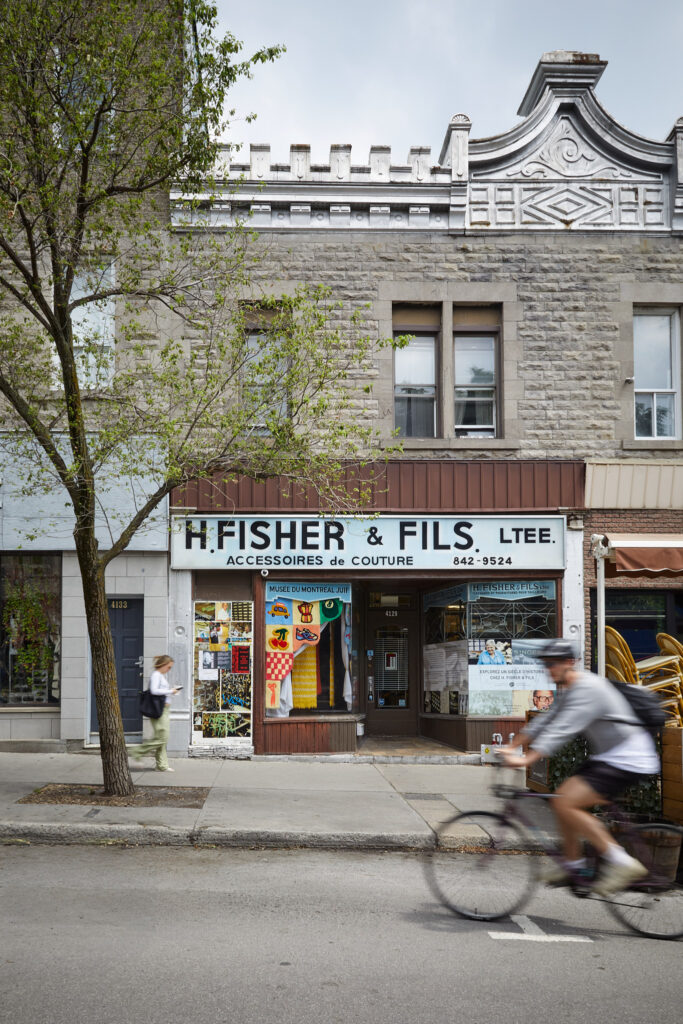
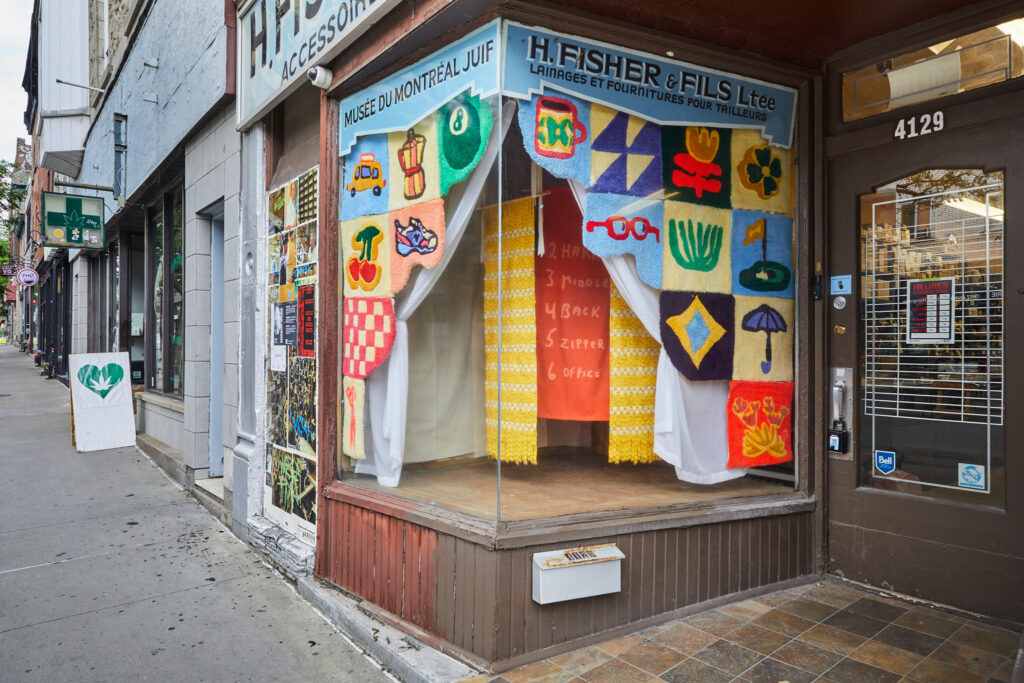
A site-specific textile installation by Montreal-based artists Sultanna Krispil and Shannon Stride, Beginner’s Luck responds to the legacies of the H. Fisher & Fils garment supply shop, its final proprietor Esther Fisher, the history of Montreal’s garment industry, and their own experiences exploring the layered emotions of starting something new. 

Sultanna and Shannon were asked by the Museum of Jewish Montreal to create a new work from a broad prompt: What does the H. Fisher & Fils site and its story inspire? What do you want passersby to know, see or feel about the site? For the artists, answers emerged as they dove into the oral histories and research materials about the site. 

Esther Fisher, who ran the shop from the 1990s until 2022, took over the store well into her middle age following her husband’s passing. Her stories of this time, in the early stages of her proprietorship – her humour, excitement, trepidation, struggles, and successes – all became fodder for Shannon and Sultanna’s collaboration. Drawing on a range of materials and symbols, their layered fibre-based work connects Esther’s experience with their own as emerging artists working on their first large-scale installation.

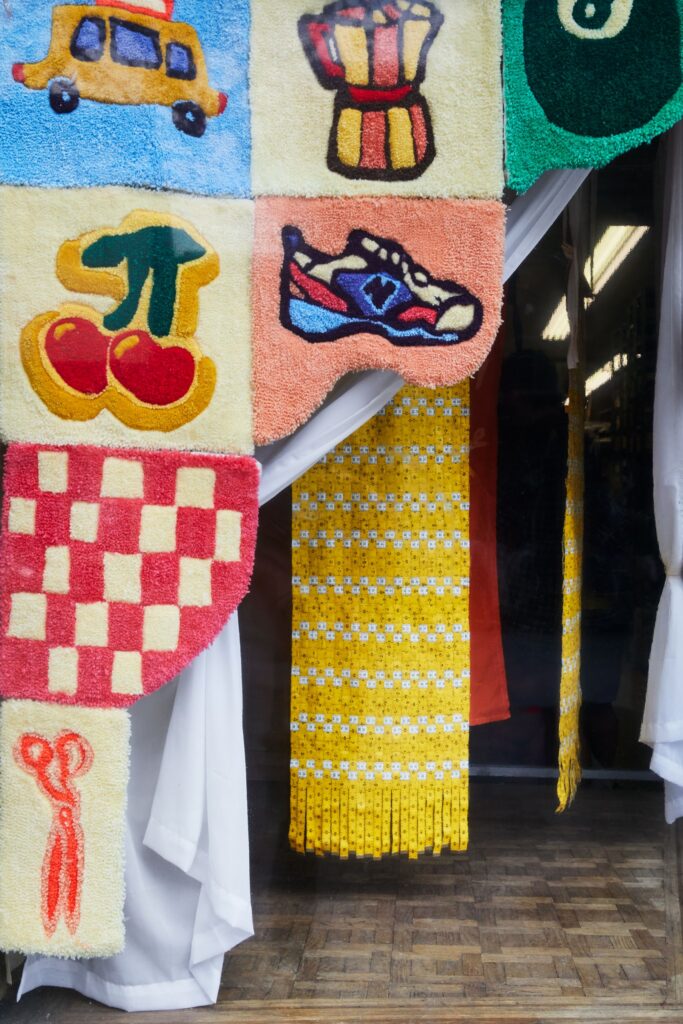
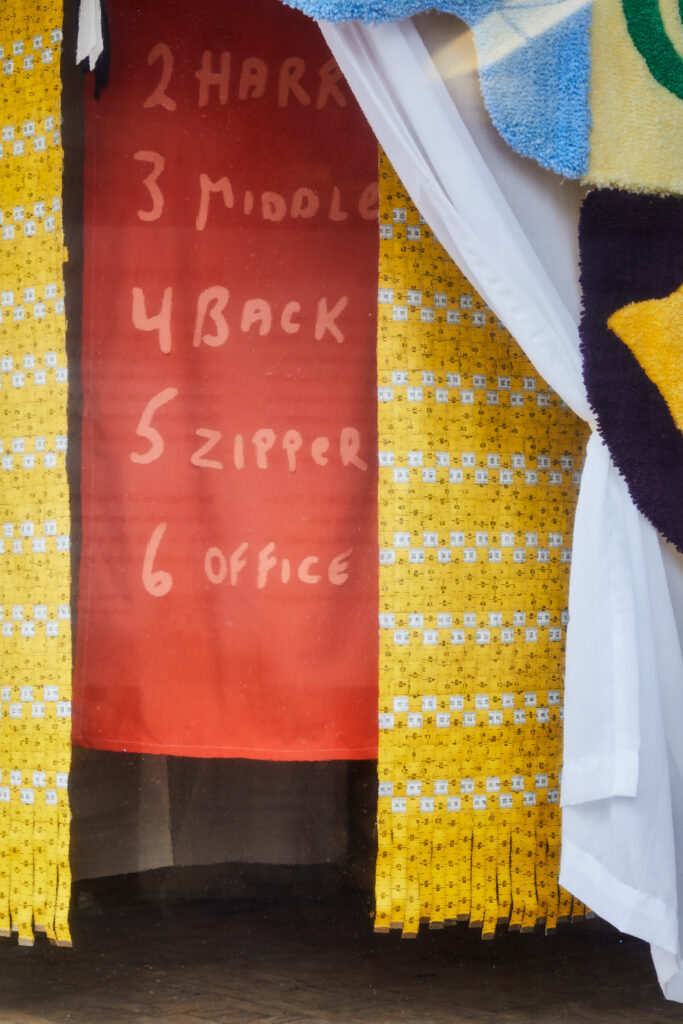
While each layer has meaning in its own right, Beginner’s Luck becomes a playful and colourful representation of the historical and emotional tensions of this site and its stories. Two illustrated rug panels frame the piece as the outermost layer. Here, Sultanna draws on the language of good luck charms to create a visual language of protective talismans, connecting herself and us to Esther. While some are instantly recognizable (a four-leaf clover, a Magic 8 Ball), others are more specific to Esther’s life and the shop: her New Balance sneakers,the fabric shears. Deeper into the vitrine hangs two handwoven tapestries by Shannon Stride constructed from measuring tapes found in the shelves of the shop. The works and Shannon’s process reflect the deep lineage of Jewish makers and textile workers along the Main, while literally weaving in the tools of their trade.

A fragment of Esther’s handwriting floats as the final layer of the installation. Lifted from the walls of the shop and assembled using applique techniques, Esther’s list presents as a cryptic note. The sequence feels intimate: a record of movement through the world, a strategy for holding it together. By placing Mme Fisher at the centre of the work, Beginner’s Luck becomes a quiet ledger of what once was: a soft proof that something meaningful began here. Beginner’s Luck is the inaugural installation in the Fisher vitrine, beginning a year of contemporary art interventions drawing from Jewish culture and heritage as it relates to this celebrated storefront. 

In collaboration with

This installation was produced under the Montreal Jewish Arts Collaborative (MJAC) granting initiative, made possible through the support of CANVAS, the Azrieli Foundation, the Averbach Family Foundation, and the Canadian Race Relations Foundation.


Shannon Stride is a crafter, curator, and arts writer residing in Montréal / Tiohtiá:ke / Mooniyang. She holds an MA in Art History from Concordia University and a BA in Contemporary Studies and Gender and Women’s Studies from the University of King’s College. As the In-House Curator at S.A. Jarislowsky Investments, she manages a diverse collection of modern Canadian and Québécois art. She has edited the eBooks Guide to Studying the Visual Arts in Canada (2023) and Craft and Craftivism (Volumes 1-3, 2025). She also writes about contemporary craft as the Craft Content Developer at the Canadian Crafts Federation. Shannon’s work is united by her commitment to accessibility in the arts and feminist art histories. Alongside her professional endeavours, she also enjoys learning new fibre arts techniques and exploring new ways of making things with her hands.

Sultanna Krispil is a multimedia artist based in Montreal. Working at the intersection of performance, film, and visual art, Sultanna Krispil’s practice often circles themes of identity, memory, and family. She is particularly drawn to the ancestral echoes within personal stories—how these echoes hum beneath the surface of contemporary life. A third culture kid of Moroccan Jewish descent, much of her work is a process of listening—across timelines, across languages, and across generations. Recent works include the documentary film Sultanna is a Moroccan Jew Who Makes a Moroccan Rug (2023) and the two-woman show Felt Cute Might Delete Later (2022). Sultanna holds a BA in Narrative Studies and Applied Humanities from Minerva University.

Both artists are alumni of the Museum of Jewish Montreal’s Microgrants for Creative and Cultural Exploration.

Dos Baushtibl

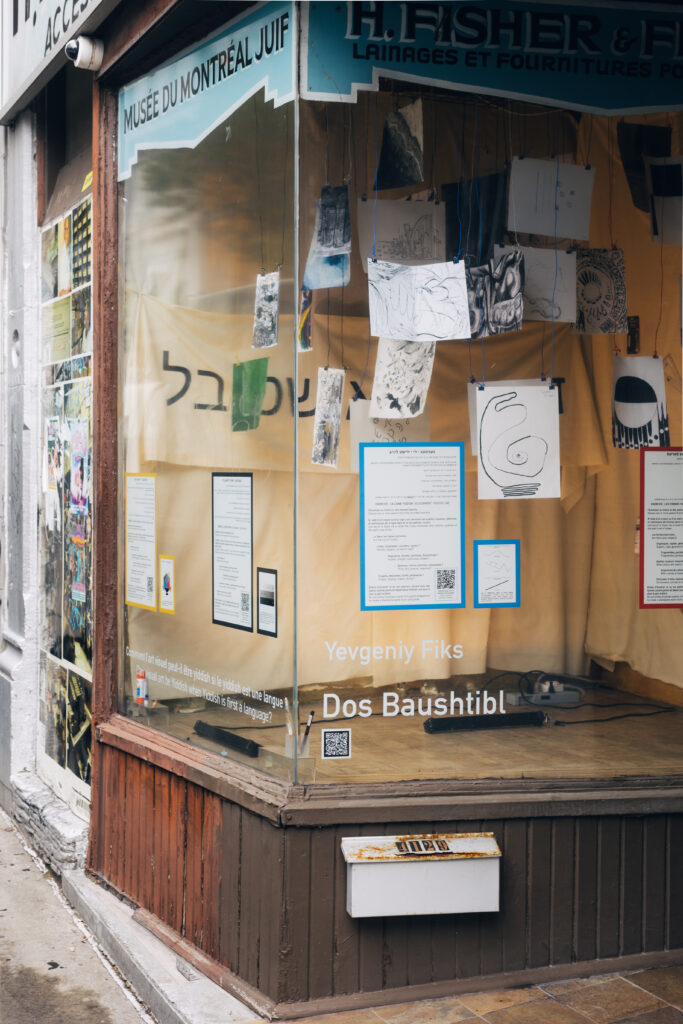
A site-specific collaborative installation by New York-based conceptual artist Yevgeniy Fiks, Dos Baushtibl draws upon the design principles developed and taught by the Bauhaus to investigate what can or might make visual art ‘Yiddish.’

Yevgeniy Fiks’ process-driven work which led to the site-specific installation Dos Baushtibl or “the Little Bauhaus,” uses seven prompts created by the artist to play with the question: what can or might make visual art Yiddish? Each prompt is paired with a selection of Yiddish poems that relate or call to fundamental Bauhaus design elements:

  • Line
  • Shape
  • Space
  • Form & Value
  • Contrast
  • Balance
  • Colour
  • Gray

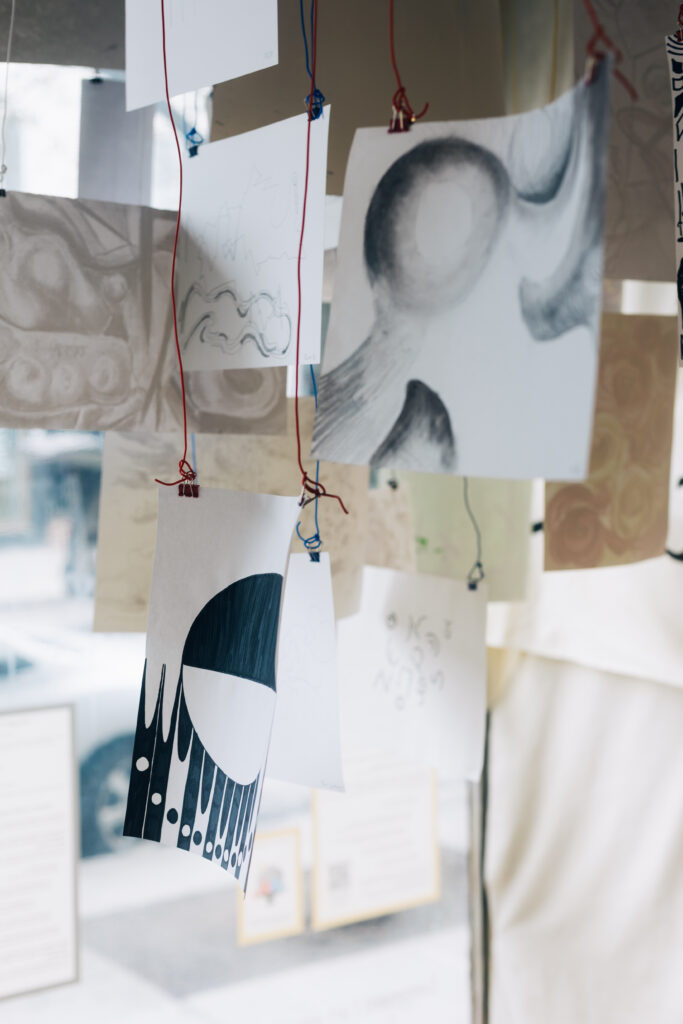
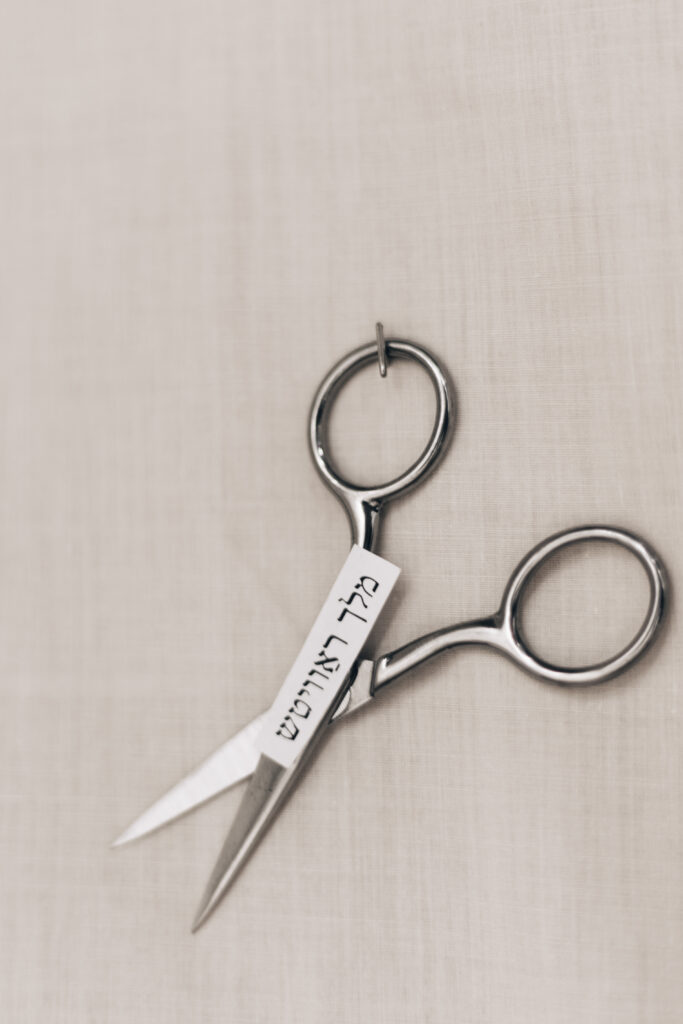
Drawing on these design principles, alongside the Bauhaus’ spirit of collaboration, and emphasis on accessibility, Fiks guided participants of KlezKanada’s Summer Retreat through the prompts, with the resulting artworks forming the basis of the installation. As seen in the vitrine display, the prompts and artistic responses to Line, Shape, Gray, and Colour together form a varied and layered body of work. Interspersed are Yevgeniy’s responses to his own prompts, and unremarkable art supplies and tools, each enigmatically bearing the name of a different Yiddish poet.

The sum of this collaborative piece is not only an invitation to consider what might make a line, shape, or colour Yiddish, but for anyone to participate in Dos Baushtibl by reading the poetry, and following the prompts themselves.

As a site-specific piece, Dos Baushtibl also acts as a kind of portal, calling to the Yiddish history of Montreal and the Plateau. Montreal has long been a centre of Yiddish life, with many noted writers (including poets like A.M. Klein, Chava Rosenfarb, and Melech Ravitch featured in Dos Baushtibl), thinkers (Ida Maze, J.I. Segal), and activists (Léa Roback, Hirsch Hershman) connected to this neighbourhood. From the early- to mid-20th century, the H. Fisher & Fils garment supply shop would have stood in the midst of a vibrant multi-lingual, and majority Jewish immigrant community. Yiddish would have been heard on most street corners, seen on signs, and featured in the front windows of stores all along St-Laurent. With Yevgeniy and his collaborators’ work, a little bit of Yiddish artistry is returned to the Main.

What is Yiddish?

Yiddish is a language spoken primarily by Ashkenazi Jews, blending German, Hebrew, Slavic, and other regional linguistic influences. Like other Jewish diasporic languages such as Ladino (Judeo-Spanish), Judeo-Arabic, or Judeo-Persian, it is traditionally written using the Hebrew alphabet.

Originating around the 9th century AD, Yiddish became a vibrant language for everyday life, literature, and culture, and by the early 20th century was spoken by around 10–11 million people. This included large immigrant communities in North America. Historically, Montreal was one of these major Yiddish centres; in 1931, 99% of its Jewish community spoke Yiddish as their mother tongue.

Today, the number of active speakers has declined to fewer than a million worldwide, though it remains vital in some Jewish communities and cultural circles.

What is the Bauhaus?

The Bauhaus was a school of art, design, and architecture founded in Weimar, Germany in 1919. The school pioneered a modern and avant-garde approach, emphasizing collaboration between artists and craftsmen, uniting fine art with practical design, and espousing principles of simplicity, geometry, and functionality.  the Bauhaus ethos sought to bring beauty into everyday life through well-crafted, accessible objects.

The school became a center of modernist innovation, with influential artists such as founder Walter Gropius, Mies van der Rohe, Wassily Kandinsky, and Anni Albers teaching at the school. The faculty also included Jewish artists such as architects Marcel Breuer and painter/photographer László Moholy-Nagy.

In 1933, the Nazis forced the Bauhaus’ closure, condemning its internationalist and avant-garde ideals as “degenerate.” Many of its teachers emigrated to North America, where figures like Gropius, Moholy-Nagy, and van der Rohe reshaped art and design education, embedding Bauhaus principles at the core of modern art pedagogy.

What is a Yiddish Line, Yiddish Shape, Yiddish Color?

This conceptual project takes the form of a workshop that explores the foundations of two-dimensional design through the lens of Yiddish culture—and more specifically, Yiddish poetry.

Dos Baushtibl mimics the Basic Course of the Bauhaus, the famed modernist art school in Weimar Germany during the 1920s and ’30s, with its focus on visual fundamentals such as line, shape, form, and color.

There were a number of Yiddish-speakers in the historical Bauhaus in Weimar (mostly among the students). Dos Baushtibl pays tribute to that history and makes the Yiddish presence in the 20th-century modernist education project less inconspicuous. It adopts Bauhaus principles and uses them as a foundation for a distinctly Yiddish visual art.

The title Dos Baushtibl is a Yiddishized diminutive of “Bauhaus,” simultaneously mimicking and questioning the asymmetrical relationship between secular Jewish/Yiddish culture—especially visual art—and the grand traditions of European art.

Where does Yiddish visual art begin? Given the centrality of language in Yiddish culture, Dos Baushtibl uses Yiddish poetry as a point of departure. However, this project does not simply illustrate Yiddish literature. While recognizing the importance of language in Yiddish culture, Dos Baushtibl draws from Yiddish verse to create independent, stand-alone works of visual art.

Thus, Dos Baushtibl exists at the intersection of several contradictions:

  1. How can visual art be Yiddish when Yiddish is, first and foremost, a language?
  2. Can literature serve as a foundation for autonomous visual art?
  3. Can a project rooted in a mainly European artistic tradition achieve independence from that tradition—or will it always remain a provincial tag-along, a small-scale Yiddish “Bauhaus” following in the legendary institution’s footsteps, locked in an asymmetric relationship?

Can Yiddish visual art escape the hegemony of both Jewish literary tradition and the dominant European artistic legacy? Or can it draw from both and still claim autonomy and authenticity?

Dos Baushtibl is an experiment in search for formal autonomy in Yiddish visual art—a search that must begin with the basics: the foundations of visual art itself. It goes back to the fundamentals, beyond context, history, memory, and inherited do’s and don’ts.

Yiddish visual art begins at the beginning—with the basics of line, shape, form, and color.

In Collaboration With

This installation was produced under the Montreal Jewish Arts Collaborative (MJAC) granting initiative, made possible through the support of the Averbach Family Foundation, CANVAS, The Azrieli Foundation, and the Canadian Race Relations Foundation.

Amour Toujours

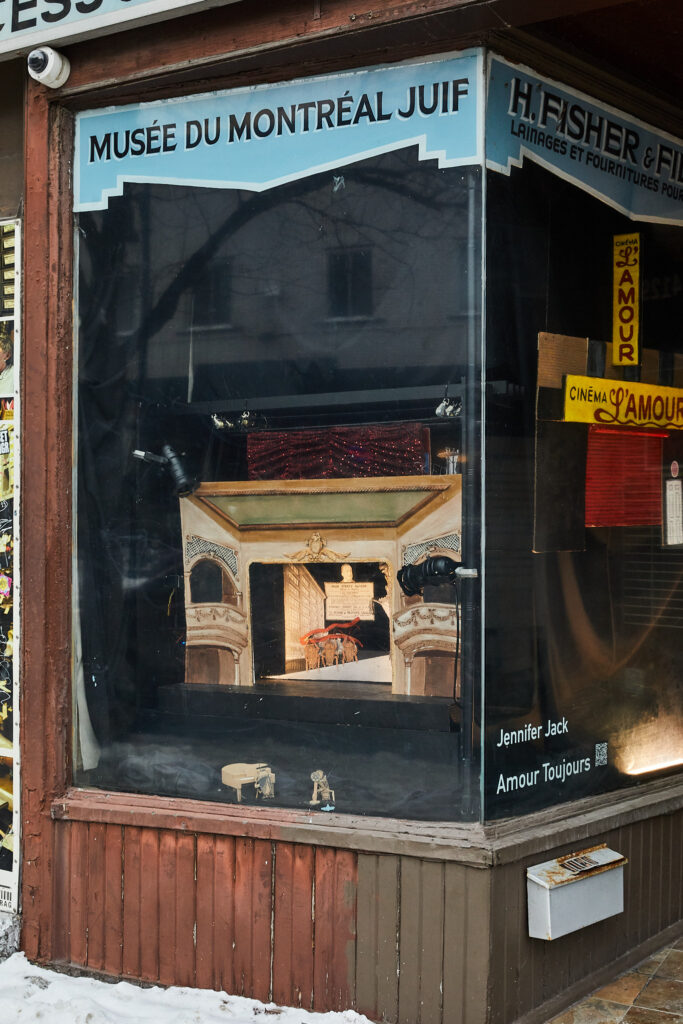
A site-specific toy theatre installation by scenographer Jennifer Jack, Amour Toujours is a playful exploration of Cinéma L’Amour’s history as an auditorium for Yiddish vaudeville performances and its place in the historically Jewish corridor of Saint-Laurent Boulevard.

Amour Toujours explores the multilayered history of Canada’s last adult cinema, Cinéma L’Amour, through toy theatre and shadow puppetry. By peeling back these layers, this work considers the cinema’s history as a Yiddish vaudeville theatre, Jewish life in the Plateau, and more broadly, the rise and fall of public amusements in urban space. Amour Toujours situates the cinema as both a physical site for historic excavation and a playground for speculation, where real and imagined histories grow.

The site known today as Cinéma L’Amour first opened as The Globe in 1914 and then again as Le Hollywood in 1932. It would have been a neighbourhood landmark for the local community to see affordable Yiddish film and vaudeville. The theatre transitioned to showing only adult film content in 1969, re-opening as the Pussycat in an era where many film theatres closed due to the advent of television, or re-established themselves as adult theatres to serve the changing market.

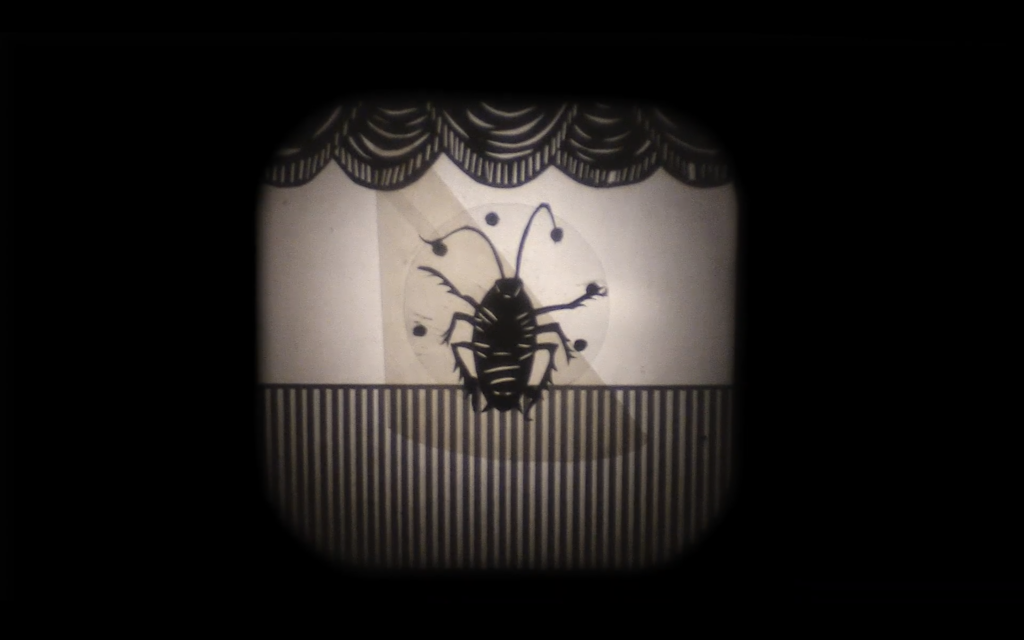
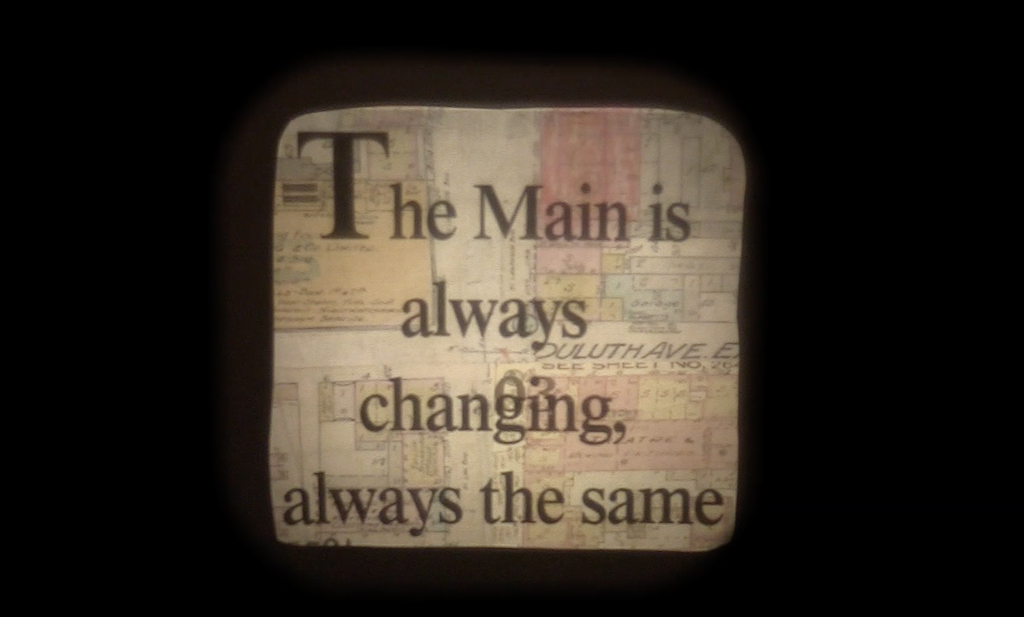
Initially developed as part of the Museum of Jewish Montreal’s Microgrant Program in April 2025, Amour Toujours has been expanded upon to incorporate more sophisticated mechanics and animations. Inside the theatre, a curtain and numerous backdrops fly in and out, depicting a series of tableaus. At the back of the theatre, a screen presents a three-part film, illuminating history through newspaper clippings, fire insurance maps, and whimsical reimaginings of vaudeville and adult film through a sequence of cockroach shadow puppet animations, all filmed on an overhead projector.

The title Amour Toujours, and the cockroach characters embedded in the piece, imply the resilience of the theatre through the evolution of mass entertainment and its changing audiences. Today, Saint Laurent Boulevard hosts family-run businesses and new developments, adding to the shifting texture of Montreal’s identity.

What is Vaudeville?

Popular in the mid-19th to early-20th century, Vaudeville theatre is a form of variety entertainment that showcases a combination of burlesque, comedy, and dance routines, with its roots found in what is often termed “low-brow” popular entertainment, such as sideshows, circus acts, minstresly, and dime museums.

Within the North American Jewish context, vaudeville also incorporated components of Yiddish theatre, musical, and comedy traditions becoming a significant avenue for European Jewish immigrants to navigate assimilation within Canada and the United States. With many de facto prejudicial barriers to professions and institutions Jews encountered in their new homes, Yiddish vaudeville provided a special kind of space; a place of joy and escape for and by Jews in their own language.

Much like New York City, Montréal was a hub for Yiddish vaudeville entertainment (and vaudeville more generally), offering highly sought-after Yiddish venues such as Le Monument-National (present day National Theatre School) and The Globe (present day Cinema L’amour).

What is Yiddish?

Yiddish is a language spoken primarily by Ashkenazi Jews, blending German, Hebrew, Slavic, and other regional linguistic influences. Like other Jewish diasporic languages such as Ladino (Judeo-Spanish), Judeo-Arabic, or Judeo-Persian, it is traditionally written using the Hebrew alphabet.

Originating around the 9th century AD, Yiddish became a vibrant language for everyday life, literature, and culture, and by the early 20th century was spoken by around 10–11 million people. This included large immigrant communities in North America, who generated a great deal of public entertainment in the language, such as theatrical productions, vaudeville variety acts, and pop music. Historically, Montreal was one of these major Yiddish cultural centres; in 1931, 99% of its Jewish community spoke Yiddish as their mother tongue, and would have sought out activities and entertainment in their native language at locations like The Globe Theatre.

Today, the number of active speakers has declined to fewer than a million worldwide, though it remains vital in some Jewish communities and cultural circles.

What is toy theatre?

Toy Theatre, also known as paper theatre or model theatre, is a miniature tabletop stage form popularized in Europe during the early 19th century. These miniature stages began as souvenirs for enthusiastic playgoers, but the form quickly turned into a popular pastime activity for individuals of all ages. Like the toy theatre on display in our front vitrine, typical toy theatres consist of a proscenium arch, with set pieces, scenes, and characters mounted to flat pieces of cardboard. These individual layers are commonly manipulated by sticks or hanging wires. In recent years there has been a resurgence of the art form amongst puppeteers and artists alike because of the practices’ accessible nature and the ample possibilities it affords. 

Within the Jewish North American context, much like general puppetry theatre, toy theatres can be seen integrating Eastern European and Yiddish folk traditions.

In collaboration with

This installation was produced under the Montreal Jewish Arts Collaborative (MJAC) granting initiative, made possible through the support of CANVAS, the Azrieli Foundation, the Averbach Family Foundation, and the Canadian Race Relations Foundation.

Contact Us