
Listen to this Oral History
Description
Rakel Saad reflects on her journey from Lebanon to Canada, and contemplates the sacrifices inherent to immigration stories. This oral history was conducted as part of Yuula Benivolski's project, The Ocean Between Us.Transcript
(0:00 - 3:57)
I… Basically, I only have two memories of my childhood because I left when I was five. So the only two memories I have was… the first one was when my father got kidnapped and he didn't come home for like over a week and the only thing I remember is my mom crying all the time, you know, all day, every day, and just praying… and that's the only thing like, you know, we didn't know where my dad was but he had been kidnapped. And the other memory was when I was on the balcony with my grandmother and there was a bomb that went off and everything… like, it was a major blast, and we ran inside and I left like my little doll on the balcony and then [laughs] I wanted to get it so then my grandma went and got it for me. And those are really the only two memories of Lebanon that I have. I really don't remember anything else.
It was in 1975 when the civil war began in Lebanon and there was, you know, the Jews and the—not the Jews… the Christians and the Muslims were fighting against each other, and the Jews, you know, have always been a minority, so nobody really liked them, and I think at some point there was like a roadblock and my dad was traveling with a colleague of his—I don't know if they were going to work, coming back from work, something like that—and there was a roadblock and they stopped them. They kidnapped them. The colleague was also Jewish and they, you know, they were like, in detention. They were tortured for a few days and at one point they killed the colleague, and they told my dad, you're gonna be next. You know and that went on I think for like just over a week. And at the time my father had a very good friend that was a Muslim and he's the one that finally got him out. He got him out. He arranged for him to go straight to France and then he called my mom and he said, okay your husband is safe. He's staying in France at a place called Foyer de Neuilly which is kind of like the, you know, the JIAS here, like the immigration services. And then like within a week we, you know, we just left, me, my mom and my brother. And we met my dad at that place in France. We were there for about six months and then from then on we went to… we were, we were accepted in Canada and we came here.
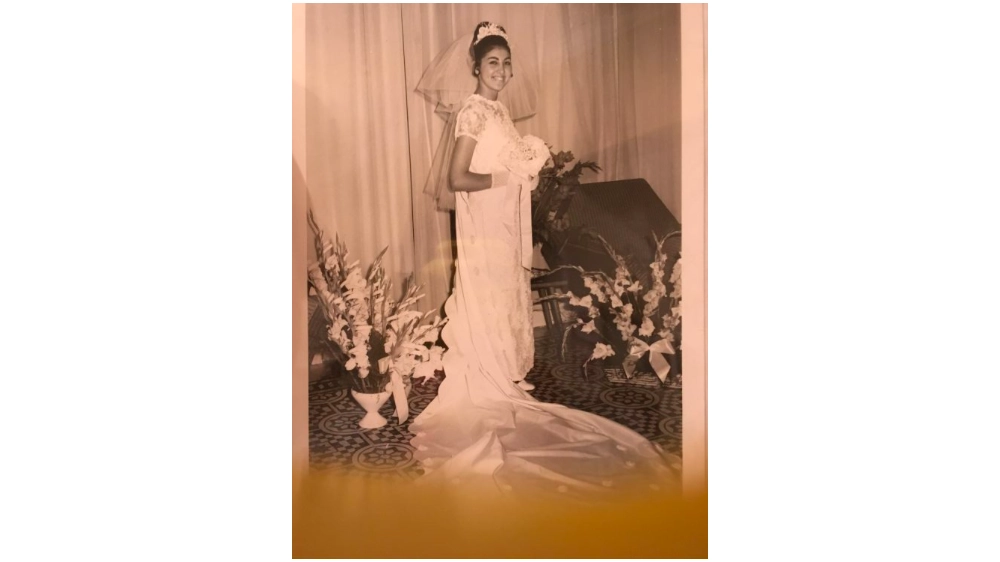
Yeah, we literally came with nothing. My parents closed the door and left. That's it. That's why I was telling her I don't have any pictures of us in Lebanon. And these couple of pictures that I have here that I brought are from my mom… at one point she went to visit her aunt who was in Israel and these are pictures that belong to the aunt. So that's why we have these. But otherwise we have no pictures, nothing from before the time we got here. Even in France I don't have any pictures.
(3:57 - 5:48)
They were… they were very nice in France. Like, we were, we were taken care of because we literally came with the clothes on our back. So, you know, they gave us like an apartment, they gave us food, whatever they helped us to, you know, just settle in and and then from then on I know that my dad tried to like immigrate here and then he he got accepted so he came, we followed again a few months later, and we've been here ever since.
My dad's family that had gotten out before had gone to Israel and my mom's brothers went to, to New York, so we didn't really have any, any family. We knew that there was like a small community of Jews from Lebanon that had come to Canada earlier, like before the 70s and before the war and, you know, I guess it was like an opportunity to come to a land where we would be free, we wouldn't be persecuted. The thing is my, my father had a sister that moved to Israel very young and just, just because of the fact that you, you have to do, you know, the military service there, and she had four kids, so she told my dad, don't come here, you know, your kids are gonna have to go to the military and it's terrible. I mean if you have four kids in the army, you know, it's very stressful. So I think that kind of like influenced the decision. But I mean really other than that there weren't really a lot of options.
(5:48 - 8:52)
Someone helped my parents find an apartment. It was like on Côte-des-Neiges and we, we started going to a Jewish school, École Maïmonide, and, you know, from then on it was, you know, it was our new life. It was, you know, for me… I guess the integration was way easier than it, it was for my parents because my mom, you know, she was a teacher in Lebanon. But when she came here she had to redo the whole thing because none of her diplomas were recognized. So she would like, she would work as a substitute during the day and then in the evening she'd go to study and my dad, he worked in a plant. He, he got like a job you know, general laborer, and, and he worked there for a few years, and then I guess around 10 years later he decided to open up his own company and, you know, from then on things got better. It was a little stressful but my parents definitely sacrificed a lot for us to, you know, to be where we are now.
The only reason my dad started that is because he worked here from 1976 to 1987… you know, he started off as a general laborer in the company and then, and then he took on more responsibility. In the end, he was actually general manager of the place and, and I remember actually he had told me that he, he went to the boss and he told him, you know we should increase the employees they're, you know, they're working, they're giving you their time, you have to increase them and, and the boss actually said, no we're not going to increase them, that's how we make money. And I think that kind of like… it, it bothered him so much he decided you know what, I don't want to work here anymore. And then he quit from there and he, he went and started the same kind of, of, of… textile plant. So basically it was… you buy like the fiber in bales and then you, you put it through a card. And it was a huge card, like huge, huge machinery. And he actually, you know, he, he found a used, used machine in I think it was St. Catharines, Ontario. He went, he brought it back, and then him and two other guys, you know, put it up. So they literally screwed every screw and did everything by hand.
(8:52 - 11:13)
And, and during like the… maybe it was November 1987 or that kind of thing, when I finished my first semester at Vanier and I went to work with my dad like part-time for the, you know, for that month off that I had. And then, because it was like a startup company… so it was him and a couple of employees and whatever and, and I, I started working there and then I said, you know what, I'm going to continue working and I'll go to school at night. And my parents said, no you have to go to school and I said, no you need me here, you know. [laughs]. So, yeah, so then I started working full-time, and I went to school at night and you know I finished Vanier and then I finished McGill and it was, it was long hours. But, you know, when you're young and, and you have a car, so you can do anything [laughs].
You know, I, I think for my parents, they would have… they, they would consider themselves more Lebanese than I am because I was there, you know, only five years, and I don't really have any attachment any, any memories. So for me, yeah, it's true, I'm Lebanese, I speak Arabic—not at a very advanced level, at a very basic level—but no, I, I consider myself more like a Canadian Jew, you know, than…
The immigrant story is, is similar across, you know… because I've, I've had like clients who are Filipinos or who are, you know, who come from other countries, and they struggle as well. The first generation here of immigrants is always the one that really sacrifices everything. But then their children grow up and, you know, they have a lot more opportunity, they have a lot more success. And I, I think that's not only just the, you know, the Jewish community. I think that goes for all immigrants.
Disclaimer
Please note that the views and opinions expressed in these recordings are those of the interviewee alone and do not necessarily reflect the positions of the Montreal Jewish Museum, its staff, or its Board of Directors. These recordings are presented as personal recollections for historical and educational purposes. Individual accounts reflect the interviewee's personal perspective and lived experience, and have not been independently verified for factual accuracy.
These transcriptions and translations have been produced using automated transcription and translation tools, followed by human review. Despite this process, inaccuracies may remain. If you identify an error, please contact research@imjm.ca with the page link and your suggested correction.