
Listen to this Oral History
Description
Georgette Bensimon’s life story, who arrived to Montreal in 1958 among the first Jewish Moroccan immigrants. Second part.Transcript
(0:00 - 0:15)
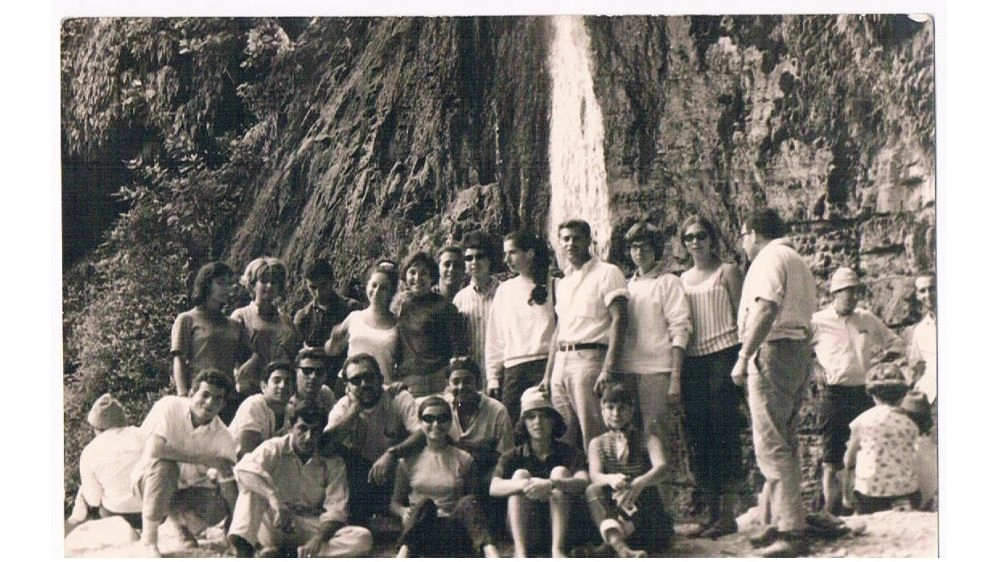
When I finished high school, I went to Israel for eight months to work on a kibbutz. I was looking for my Jewish identity. In Morocco, there was no question of who was Jewish and who was not Jewish.
(0:16 - 2:21)
Whether you ate kosher or not eating kosher, it was like, I mean, we lived in a milieu where we knew each other, and even Arabs knew who we were, so there was a certain respect. And, you know, eating kosher was not even a question. I mean, I'd go to my cousins, my aunts, or whatever.
I didn't even ask, and it's when we came here that this became a reality for me, because we didn't have... I remember the one time I was walking with my father on the mountain, and I saw a couple of Hasid walking along with black hats and payot and I asked my father, who are these people? And he said, they're Jews. And I went, what? And to me, that was like a shock. I mean, how can they be? They don't look like us.
I don't look like them. So that was, to me, my Jewish identity was like, I was looking for it, and I didn't know where. So to me, Israel was the answer.
I was hoping to have an answer to my existential question over there. To the despair of my father, my two sisters married French Canadians. So that was even more of a question for me.
Who am I in this? Like, what does Jewish mean when my two sisters, my nephews and nieces, were raised in a Catholic environment? So it was interesting. So when I went to Israel, and I was in a kibbutz that was Hashomer HaTzair, which is very leftist, was very open. And they told me, the day of Yom Kippur, they said, if you decide to eat, then you have to work.
And if you don't eat, then you can go to synagogue and pray. I went, what? To me, it was no question. Yom Kippur is the most sacred day of the Jewish religion.
(2:21 - 3:06)
You don't even question whether you're going to fast or not. You fast, and you do what you have to do. So that was, so my question was not answered in Israel.
Came back from Israel saying, okay, yeah, it's a nice country and everything, and I love it. But my questions, I didn't find my identity there. I didn't.
I became a Zionist, yes, but not as a Jewish identity. I could not relate to that. I still had work to do with that.
So when I came back, I enrolled at Sir George William. It became Concordia now, and studied. And then at one point, I came in contact with yoga.
(3:08 - 3:56)
It was not a fashionable thing then. On the contrary, you were treated like a weirdo, because what? And you're vegetarian? What? My sisters would tear their hair out. What are we going to make you? I don't know what, you know, come to their house and sit on the floor, wear long skirts. Couldn't understand. But that was my calling.
And then I ended up in India. I started teaching yoga. I went to India. I became what I consider a JuBu, which I still consider myself a JuBu. It was in the 70s. Yeah. And then I got really involved in yoga, and it became kind of a way of life.
(3:56 - 7:26)
But what I do retain from this is that Buddhism made me realize that I should be a good Jew. It's very odd, but I had to go all around like this to come back. And I came back to Montreal, still looking and stuff.
But I ended up doing my career with Air Canada. My brother, may his soul rest in peace, had a brilliant career as director of National Film Board. And amongst his achievement was a film called Vingt Ans Après, which made a point of 20 years after we came, in 58, so it was like 78.
He had kind of, you know, summed up what the Jewish Moroccan community was up to with that film. And I always joke and say somebody should make Soixante Ans Après right now, because we have to redo the pointings and go, you know, okay, where are we now? This is a [unintelligible]. I mean, there has been progress, but it would be a good thing to put it down on film, and it would be interesting.
He didn't, unfortunately, have time to do that.
(5:10 - 5:51)
[in french] So, today, I still consider myself a JuBu. I’m a Zionist and a vegetarian.
I’m a member of an anti-BDS committee. I’m a guide at the Holocaust Museum. I think I’m the only Moroccan woman there.
But it’s not really part of our traditions to do this kind of thing. But for me, it’s important. I’m on the board of the Yom Ha’atzmaut committee, and on the board of the Montreal Israeli Film Festival.
For me, it’s important to be involved.
(5:51 - 7:27)
And I'm very active with my Reconstructionist congregation, Dorshei Emet. It's an egalitarian and open congregation.
So where women and men are like, there's no separation. Definitely no separation. It's the only one I feel at ease in, because it's very, very open, even open to gays and gay rights and everything.
So it's a far cry though from the little synagogue in Agadir, where I never understood, even when I was very six years old, why only men could touch and read the Torah. I always felt that calling. I felt I wanted to know more.
And as a girl, I knew that I was limited. I could not go any further. So where only the boys also had the right to be accepted by the community as responsible beings and did their bar mitzvahs.
Today in Dorshei Emet, a girl does her bat mitzvah. It's like not even a brainer. You don't even question.
It's a natural thing to do. As a part of the community, you have to be accepted, whether you're a woman or not. So I'm an ardent feminist.
My mother was, and I think I got it from her as well. So what I learned is that even if we have different denominations in our community, I feel we are one people. I consider myself Jewish first.
(7:27 - 7:53)
I have one foot in the Sephardic community, one foot in the Ashkenazi community. I do that because those barriers exist. I didn't make them up.
But due to the fact also that I speak French and English, I go from one to the other. I feel at ease in one and the other. My congregants joke and say, you're an honorary Ashkenazi.
(7:55 - 9:42)
Because being a docent at the Holocaust Museum made me go into this whole part of Jewish history, which I was not aware and would not have been aware if I had stayed in Morocco. It's something that is very, very important for our nation. I got into it, and it was heart-wrenching.
It took me at least four months before I could do a guiding tour in a level way without coming out of there and crying and being really emotionally touched. So I consider myself being a Jew in one community or the other. I've been criticized in one or the other, but I don't care because I just feel it's important that we manage to move forward and defend ourselves if need be.
So I don't think I would have been as liberated and open a person if my parents had stayed in Morocco. I'm very thankful that my parents had the courage to come to Canada. Here we were able to live in a democratic society and where we were free to express ourselves religiously or not if we wanted to, and where we were given the opportunity to become who we wanted to be.
So I wish this situation was stable, but I'm realistic and I know our history very well. The world is changing. Will we as Jews have to move on again? That's a big question.
(9:43 - 9:59)
I can't answer that. My daughter is a doctor. Will she choose to remain here or have to move on to Israel? Only the future will tell.
I don't think anybody can say one way or the other.
Disclaimer
Please note that the views and opinions expressed in these recordings are those of the interviewee alone and do not necessarily reflect the positions of the Montreal Jewish Museum, its staff, or its Board of Directors. These recordings are presented as personal recollections for historical and educational purposes. Individual accounts reflect the interviewee's personal perspective and lived experience, and have not been independently verified for factual accuracy.
These transcriptions and translations have been produced using automated transcription and translation tools, followed by human review. Despite this process, inaccuracies may remain. If you identify an error, please contact research@imjm.ca with the page link and your suggested correction.