
Listen to this Oral History
Description
Cheryl's ancestors arrive in Canada from Lithuania at the turn of the 20th Century, make new lives in Halifax and Bridgewater, Nova Scotia. The story moves on to Saint John. New Brunswick, and from there to Montreal for Cheryl and to New Orleans, Louisiana for her sister June and to Israel for her brother Jon. From there it continues into the future.Transcription
(0:00 - 0:28)
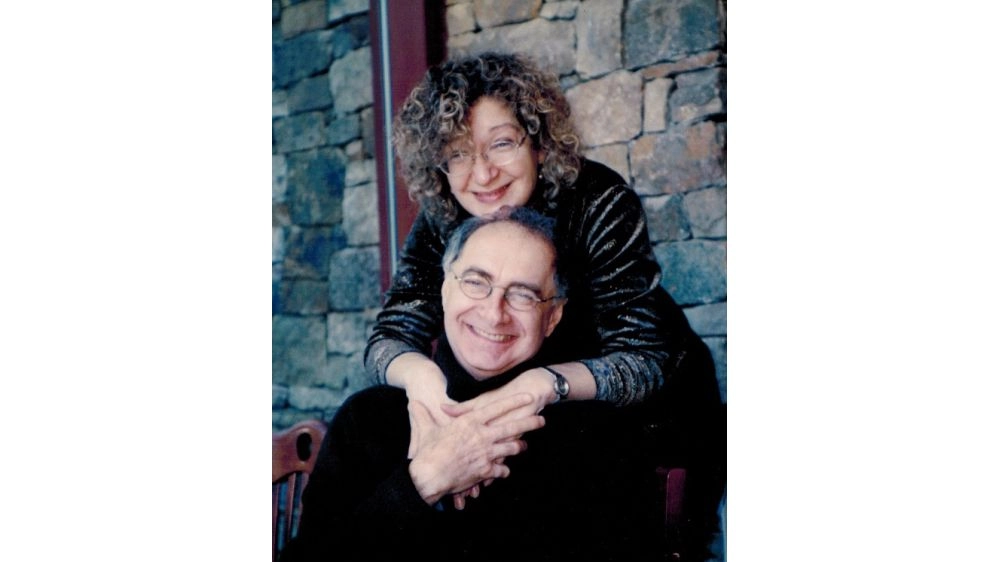
Hello, my name is Cheryl Everett and I've been asked to tell you a little bit about myself and my family. I was born into a Jewish family in St. John, New Brunswick. My grandparents came from Lithuania and Russia, Marijampolė and Dubingiai, and I don't know the town in Russia, and they came over at the turn of the 20th century, and my parents then were born in Canada.
(0:28 - 1:09)
My grandfather became a peddler when he moved to Canada, and he did well in that, and he started a business as a shop owner in Bridgewater, and it eventually did well, and he expanded it until it became a small department store. He did that until World War II, when after that they opened an antique business in the house which he bought. The house itself was 20-something rooms, 24 rooms, 26 rooms, I was never really sure, but it had huge garages, and they sold antiques out of the garages.
(1:09 - 2:16)
My grandmother used to say that she never wanted to get attached to anything because eventually she said my grandfather would sell it. I remember from that house that they had beautiful lighting in the dining room, and I was told after my grandfather died that it was actually Tiffany, real Tiffany lighting. This would have been long after he died, because he died when I was eight years old, and it was only when I became an adult that I became enamored of Tiffany and Tiffany Glass myself, and this is what I was told by my sister.
My grandfather's name, my mother's father was Nathan Cohen, my grandmother was Tamara Komarski. My grandmother came off the boat, I'm told, and she decided that in there she was never going to speak Yiddish or Polish or any European language again, and she spoke only English, and she went to school, she studied English, and she studied business classes, and she eventually ran my grandfather's businesses.
(2:16 - 2:55)
My grandparents on my father's side I never knew, because they died before I was born. He was known as John Everett, his original name might have been Hanan, I believe. My grandmother was Sarah Everett, she was blind, they were orthodox, and all I know about her was what I learned from my mother, which wasn't a whole lot, but I do know about my great-grandfather, because he was a cantor, and everyone in my family loved to sing, so that was something, I guess, that we inherited from him.
(2:55 - 4:10)
My father is Sam Everett, his original name was Israel. I was told when he went to school for the first time and he was asked his name, his sister put a hand over his mouth and said Sam, because she didn't want him to be called Izzy, and the name stuck his whole life, and he eventually legalized it.
My mother was Beatrice Cohen. She came to St. John to study nursing, and during that time she met my father. That is amusing, apparently my father insulted her the first time they met, they met at a wedding, and he came up to her and told her to go home and get dressed, because he was wearing a dress that he thought showed a little bit too much, and the rest is history, because they got on after that, and they were married for 31 years, and it was a very happy marriage, I'm told. My mother used to say that my father was the love of her life, and they had a love affair for those 30 years, their whole life, with each other. Unfortunately, my father died far too young, at the very young age of 54 in 1968.
(4:10 - 5:34)
I grew up in a Jewish household, we weren't orthodox, we can't even say we were really all that traditional, but what we were was we were proud.
In St. John at the time, I don't know how many Jewish families there actually were, I would say maybe 300. It was quite a large Jewish community, and I know that there were about 20 Jewish teenagers, because we had enough to gather in a room which was given to us in our high school for our Young Judaea meetings. I would say most, if not all, of the young people who grew up in St. John participated in anything that was Jewish, anything that was done at the synagogue, anything that had to do with Young Judaea. Most of us were friends with each other, although in my case, my best friend was not Jewish, she was Catholic, and I got to the point that I would go to her church with her when she had to go to church.
I'd sit in the pews, very uncomfortably, and wait for her to say communion or confession or whatever she had to do. But one thing it did is it made me learn about other people, made me very open to other people's beliefs, and she's still a friend of mine 50 years later, and we still call each other from time to time.
(5:34 - 6:33)
I have a sister and a brother. My brother grew up, he became a journalist and a writer. He was the city editor of the newspaper in St. John, the Evening Times Globe, and eventually he started his own newspaper in Bathurst, New Brunswick. He reminded me recently that they have the first rock and roll record recording in Canada, and at one point he decided that he was going to fulfill his Zionist dream and move to Israel, and so he did in the 1980s, and he's been there since.
My sister went to the United States. She's a teacher. She's taught every grade from first grade to college, and although she's nine and a half years older than me, she is still teaching, and she's teaching at the university level.
(6:33 - 9:25)
So now back to me. I came to Montreal in 1968 for the first time. I was going to a school called Chamberlain School of Retailing, where I was learning fashion merchandising and retail merchandising, and I came here initially because I was offered a job between years in the Simpsons department store, and I came here. I'll tell you about my first night.
My first night in Montreal, I got a room at the YWCA, and I had to report to work at the department store the next morning. And, to get myself ready – you know I have always had extremely curly hair, straight hair was in style those years, so I started to put this chemical straightener on my hair, and just when it was on, and it has to sit there for 20 minutes or half an hour, the alarm went off in the building, and we were evacuated. Apparently there was a fire.
People were hammering on my door saying, get out, get out, and I didn't know what to do. Should I, you know, wash the stuff out of my hair, or should I go out in the street and have my hair fall out? So I chose to wait the extra minute, washed the skunk out of my hair, threw on my pajamas, and went out in the street. That was the first night.
Eventually they let us all back in because the fire was next door, it wasn't in our building, and we were allowed to go back. So next morning I got dressed, my hair still intact, surprisingly, and I didn't know where I was. I hadn't been in Montreal since I was eight years old, and I went up to a policeman, and I asked him very nicely, you know, if he could tell me where the Simpsons department store was, and he just looked at me, you know, this was at the beginning of the Quiet Revolution, and he said, “I don't speak English, you speak French.” And that was my first day in Montreal.
Surprisingly I came back the year following to live permanently, but that's only because I couldn't get a visa to work in the States, but Lord knows I tried. I even had called senators, state senators and federal senators who were friends of my roommate's father to try to help me to stay, but clearly since I wasn't going to be voting for them anytime soon, they didn't do anything to help me, and I came back to Montreal, and my mother decided to move to the States within a short time, and she was able to take me as a dependent, because I was still under 21, which is legal age at the time, and by the time our visas came through, I just, you know, I had a life, I had friends, I had a job, I had a house, I was living in an apartment, and eventually I found a boyfriend, and so I decided to stay.
(9:25 - 10:52)
A couple years later, I found another boyfriend who I eventually married. He would be Leonard Slapak. There were things about him that attracted me to him at the time, and talking about his personality, he was, he was very young, he was 21, and I was young too, I was a few months older. We were both young and ambitious and starry-eyed, and we got married for the wrong reasons. We were totally incompatible, but we ended up being a couple for 27 years, and one of the things that I was interested in Len at the time is that he was very resourceful and responsible. His parents were both Holocaust survivors, they were both alive, and he felt responsible to them, and I thought that he had the qualities of being a good son that sometimes makes a good husband and father, and also I was fascinated by the story. I got to know my mother-in-law very well, and I learned a lot from her, and I admired her, but the story permeated in the family. I mean, when you're a second generation of Holocaust survivors, it really does inform your personality, I think.
(10:52 - 11:55)
Anyway, from this marriage, which did not end well, we did have two children, two daughters, who I love dearly. One is Sivan Slapak, the other is Sharon Slapak. Sharon married 13 years ago, 14 years ago, I can't remember now, and she has two sons of her own, one of whom is very shortly going to be Bar Mitzvah.
My other daughter, Sivan, lived in Israel for 20 years. She went on a work-study program at a certain point called Livnot U’Lehibanot, and eventually she just moved back. She worked for them, she went to school, she earned a Master's degree.
She's always been doing things in the arts and social area, and now she decided just last year to move back to Montreal, and here she is back with us, and I'm very happy for that.
(11:55 - 12:30)
In 2003, I remarried Harry Rajchgot. Harry is the love of my life. We've been married now 13 years. There were things about him at the beginning, which I was a little concerned about, because of all the similarities between him and his family, and Leonard's family, and Leonard, but the one thing on which there was no similarity was in personality, and Harry and I have been very happy since that day we first met.
(12:30 - 13:34)
Now about my Jewish life, from the first day I arrived in Montreal, I attempted to get involved with the Jewish community. I've always been attracted to things Jewish, and also I wanted to make Jewish friends when I came here. So the first thing I did was I joined three different organizations. I joined B'nai B'rith Young Adults, Hillel, and the YMHA.
Hillel is because I wanted to be involved with a college crowd, even though I wasn't in college and university at the time. Later on, I started to go to night school. I couldn't go full-time. I had to support myself, but I went to night school, and over the course of 13 years got a degree and a half, you could say. The YM[H]A was for exercise and also because they had social events, and the B'nai B'rith Young Adults had everything, and I made friends in that group that I still have to this day.
(13:34 - 15:50)
After I had got married for the first time, and I had my children, when they were getting a little bit older, I really wanted them to have a Jewish education of some kind, and I was unable. I was working at the time. I was a working mother at a time when there weren't a lot available for working mothers. We were unable to put our kids in Jewish school, so I needed to find an afternoon school, and I found an afternoon school, a couple actually, but I was unable to get them there because they didn't have a car, and I was working, like I said.
So, I found Temple. Temple Emanuel offered classes on Saturday morning, and even though I did consider myself Reform and was a little suspicious of Reform, I put them in there because whatever, it was Jewish. Well, P.S., Reform became my life.
I became included in just about everything that Temple had to offer. I joined a lot of the committees, became involved in first of all in the school committee because I put my kids in the school, and then in Sisterhood Brotherhood where I did everything. I was involved in mostly in their fundraising activities, their cultural activities, and I eventually became, well, I became, I was a treasurer for 15 years until I became the president one year, and I was also involved in other committees at the Temple, and it's become my life.
I've been a member now for 30, I don't know, 37, 38 years. It has described my Jewish life. Well, the only thing I left out of this is how lucky I've been.
Even in times of despair, things have always seemed to work out for me. I really consider myself having a guardian angel. From the first day I was born until I had a stroke later on to my unfortunate first marriage, everything seemed to have worked out for the best, and there were other times in my life when I said, oh, this can't be, but things worked out well.
So this is my life. Thank you very much.
Disclaimer
Please note that the views and opinions expressed in these recordings are those of the interviewee alone and do not necessarily reflect the positions of the Montreal Jewish Museum, its staff, or its Board of Directors. These recordings are presented as personal recollections for historical and educational purposes. Individual accounts reflect the interviewee's personal perspective and lived experience, and have not been independently verified for factual accuracy.
These transcriptions and translations have been produced using automated transcription and translation tools, followed by human review. Despite this process, inaccuracies may remain. If you identify an error, please contact research@imjm.ca with the page link and your suggested correction.