
Listen to this Oral History
Description
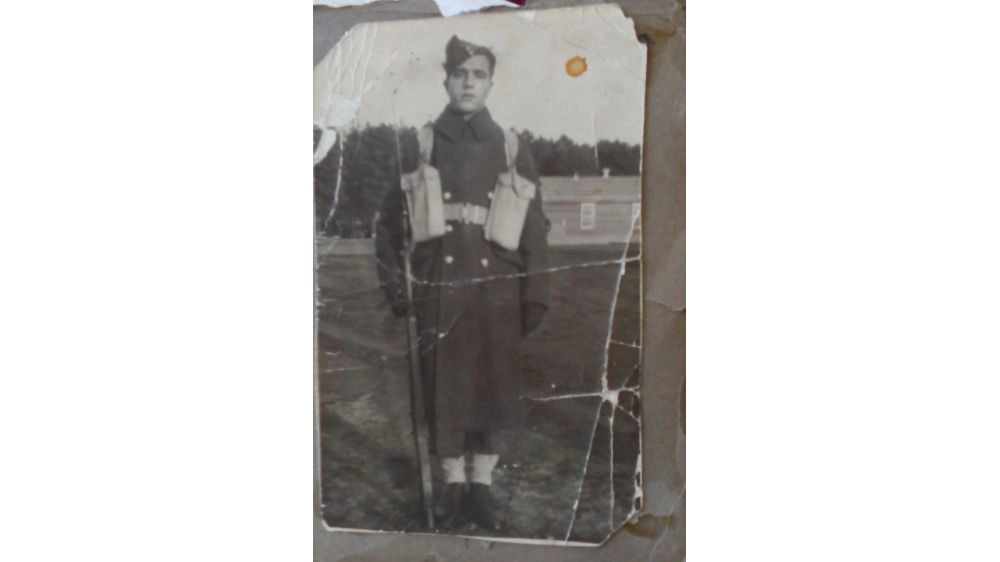
Listen to 95-year-old Harry Hurwitz from Lachine recount his dramatic story of serving for the Canadian navy during WWII, where he survived the torpedoing of his ship only to be taken as a prisoner of war for over a year.Transcript
(0:00 - 0:38)
My husband was in St. Anne's and my daughter came in to see him and we were, you know, there's an area where you walk, you know, the rooms on either side and so, but you're there, you go visit everyone, you know, so we were, she was walking along and she saw me, she stopped to talk to this sailor and I was with her and came by and um, so she was talking to him who was in his room sitting and I said, do you know Harry Hurwitz? He said, yes. Tell the rest.
Oh, uh, what?
They jumped ship together.
(0:38 - 1:23)
Oh, all three of us were on the bow and there was nothing left of the ship except the bow and me, Odette and uh, and uh, what's his name? I forget his name already. And so, and I was standing, I threw, I threw everything, I threw off my big heavy duffel coat, uh, I threw off my big boots and uh, I threw, and uh, I turned and I said, I don't know what you guys, but I'm no hero, I don't want to die. So I jumped off the ship, I jumped into the, all three of us, we all, I says, let's go and I took a dive, a fun dive into the ocean and the ocean is pretty big and pretty cold for four o'clock in the morning.
(1:24 - 3:54)
And the three of us took a dive and uh, then, I saw one guy, I looked at him, and he threw his head back, he died. And uh, the captain committed suicide and uh, well there wasn't…he was with me and uh, we stuck together, me and Odette and three of us stuck together and uh, I was hanging onto the barrel and with the barrel, I was holding on to it, it collapsed. The water got into the barrel, the barrel just collapsed.
So, I didn't know what to do. So uh, anyway, I saw the masthead broke off and all, all but uh, 15 of us hung onto the masthead and uh, then uh, we uh, I was in the water for about four hours and finally uh, all of a sudden, the ships are not allowed to stop during the war because sometimes they, they can use it, the Germans can use it as a uh, uh, they can plant uh, uh, some dead, some dead bodies there and uh, and they'll wait for, for a ship to stop to pick them up and they'd sink the ship. So those ships are not allowed to stop to pick up survivors.
We saw the ship pass by but uh, we, we, when they went, they threw out four lifeboats, four lifeboats out onto the water towards us. We cursed them when they left LA. We saw them coming towards us.
There were 18 of us in the group and then the ship came to the uh, came towards us, the uh, the small, smaller ones and we uh, I jumped in and 16 of us jumped in. We had no order, they don't give you no order, just a boat. We sat there like a bunch of dummies for seven hours.
We sat there and we talked, telling stories and all, all kinds of stories and finally and what, we were sunk before 27. How do I, how do I know if we're, my mother bought me a watch before I went. She said, I want you to use the watch and I want you to bring it back for a joke.
(3:54 - 5:36)
I want you to make sure you bring it back because I'll bring it back. Well, but uh, when I jumped into the Atlantic, the water, the cheap watch right away stopped. So I knew exactly we were sunk at 4:28 a.m. And as we saw the boat coming towards us, we grabbed a hold of it, I jumped in, Odette jumped in, uh, everybody jumped in and we, no orders, we just sat there, 18 of us and we just kept on rowing, you know, no order, we couldn't control anything.
It was going that way, it was going that way, we couldn't do it. Finally, uh, after seven hours in a boat, we're telling all kinds of jokes and then all of a sudden we had one officer on board ship. So he said, uh, anyway, he looked, “Oh! There's a ship coming towards us.”
As the ship was coming towards us, all of a sudden he says, “uh-uh, that's not one of ours.” And it came closer and it came closer and finally, uh, it was a cruiser, heavy cruiser stopped and they yelled at the captain with a big war horn, you got any arms on you, get rid of it, you got anything that's damaging, throw it away, we're going to pick you up. So it became closer and closer and finally, the two, uh, two German soldiers were lowered and they hit, they hitched a hook up to the, uh, up to the ship and the hoist set us up and that was it.
(5:36 - 6:19)
And we used to, uh, we used to, I mean, for breakfast, we used to get, uh, two potatoes, two slices of bread and tea, tea leaves. For lunch, we had, uh, soup, uh, soup, which wasn't very good and they, and they used to give us fish and we used to have to cook it ourselves. We didn't get very much to eat and we got, the water was turned on maybe four hours a day.
I had to, they used to turn the water at six, six to twelve, that was it, then they closed the water until the next day.
(6:19 - 9:55)
And, uh, we pulled a good joke on the Germans, uh, we were, about one day the Germans are having a, were having a big party of, uh, admirals, generals, it was a big, big party. They had, there was no coffee in Germany during the war.
We had coffee because we used to get a Red, I used to get a Red Cross parcel every week from the Red Cross, every week. In it was, uh, was a jar of coffee, about this much, enough to last for 10 days, a can of sardines, and a big box we used to get each one, uh, a can of sardines, a can of salmon, uh, uh, raisin, raisin, and what else, there was another thing in there, and, and a jar of coffee. Uh, so we used to get it every Tuesday, they'd call them, Harry Hurwitt, Harry, uh, Harry, uh, Hurwitt, that was W-I-T-T, that's me, I'd take my thing there, and the German guard would come over later, and they're trying to make a deal with me, if I give them two cigarettes.
See, cigarettes, there was no cigarettes in Germany, and, and no coffee, and cigarettes, there, civilian people only got 30 cigarettes a month, they're going to say now, uh, oh yeah, anyway, one day they decided that they're, that they’re going to have a big, huge party, so they made a deal, uh, give us, uh, collect enough coffee, and enough cigarettes, and we'll give you three lorries of, uh, potatoes. So we said that's a deal, so we, uh, we got the coffee, but what did we do with the big, big jar ? So the guys went and put a bunch of dirt in, in the coffee, but they were then told, anyway, we made a deal, they gave us three wagons of potatoes, and we gave them, uh, we gave them the, uh, the coffee, anyway, so I don't know, we weren't there to, to see what happened, but apparently the, I don't know what happened, the coffee didn't brew, and they were, and they were mad as hell. And this was on a Saturday night, Sunday morning, they came in about, it must have been about nine o'clock, eight, nine o'clock, they said, “you think you've, you made a fool of us eh? You’re not going to have no water for 48 hours.” You’re not going to have this, you’re not going to have that, we pulled a quickie on them. I was, I was missing for five and a half months, the German wouldn't let us write a letter to our parents, and they didn't notify the Allies that we were taken prisoner, it was five months, nobody knew whether we were dead or alive, I knew I was alive, but my parents, my mother and father didn't, and finally the, the Gestapo let us, uh, write a letter. My sister used to, my, uh, she used to, we lived upstairs, but my mother used to say to my sister, uh, Rivka, go downstairs and maybe, maybe there's a letter from Harry.
(9:55 - 11:28)
So she said, nah, nah, nah, for months, months, months, for six months, didn't get a, didn't get a word from me, didn't know whether they were dead or alive. Saturday morning, my mother said, Rivka, go downstairs, maybe, maybe there'll be a letter from Harry. Sure enough, she goes downstairs, and she starts yelling at the top of her voice, she told me the story when I came back, she says, see, I, I yelled, started to yell, Ma, he's alive, he's alive.
My father was just for Saturday morning, 11 o'clock, my father was in the shul, and, uh, so my mother was happy, and so my mother says to my sister, go right away, go to shul, tell, tell, uh, go tell, uh, your father that Harry's alive. She went to the shul there, and her they were dominating, uh, uh, uh, uh, and, uh, so my sister was, grabbed the door, opened the door, went in there, and she run over to my father, and she, she says, “Pa, Harry's alive, Harry's alive”. So the chazan, the chazan stops and, “what's going on here?” So, uh, so my father says, he tells, uh, he tells, , and says, my son is alive, and they all, they all shook hands and came over,
Yeah, mazel tov
They shook hands, that was in, uh, April, and then my brother, and then April, May, June, July, August, September, six months later, my other brother gets killed, but he got killed. He died in Holland.
(11:28 - 13:43)
When we were, when we were liberated, oh boy. Something happened to me that, uh, uh, at, uh, 6:30 in the morning, uh, the, uh, no, the, uh, 24 hours before, a British tank came up and said to us, nobody leave the camp, everybody stay inside, because he said, we shoot first, we ask questions after, don't leave the camp, because we'll kill you, we don't know you're, you're one of us, we think you're one of the Germans, stay inside, just a matter of another 48 hours. Anyway, so he, uh, uh, 24 hours, 18 hours, six hours, one hour in front, and the tanks come rolling in.
The first one was a, uh, uh, the, the, one of the guys was a Jewish, uh, uh, sergeant, so anyway, they, they came down, they smashed the gates down, and we were yelling and so happy and cheering. Anyway, I jumped on the tank, and then the first thing he says to one of the officers, he says, is there any Jews in the camp? So, he looked up the list, he says, yes, Harry Hurwitz. So, Laufey gets up and says, Harry Hurwitz wanted at the gate.
So, I went to the gate there, and I said, uh, sir, I'm Harry Hurwitz. Oh, yeah, yeah, I'm Sergeant Major Rabinovich, that was his name, Rabinovich from Glasgow, Scotland. So, he says, um, uh, Rabinovich, uh, only you're coming.
So, he comes over to me, and Jewish? I say yeah, he says, good, my name is, last name Rabinovich I forget his first name, anyway, so, so, I say give me a cigarette for Christ sake you know, give me the chocolate bar. Uh, uh, so, and at the canteen behind, hey, give me, uh, two chocolate bars, give me a pack of cigarettes, and, uh, give me a Coke, and Coke was in a plastic bottle, and, uh, so he sat me down in his tank.
(13:43 - 14:24)
Where are you from? I says, I'm from Montreal, Lachine, Quebec, Montreal, I said, Montreal. Montreal. You’re from Quebec? Yeah, where are you? So, he says, I'm from, uh, from Glasgow, Scotland.
He says, I'm the Hebrew faith. So, uh, he gave me, he gave me more than, more than the other guy. The other guys were rationed, each got one pack of cigarettes, the last of them.
Uh, they got one chocolate bar, but he, he slipped me two packs of cigarettes in my pocket, and he slipped me two, three chocolate bars. He says, don't say anything to anybody. He gave me extra, you know.
That's lots of stories, tons and tons of stories.
Disclaimer
Please note that the views and opinions expressed in these recordings are those of the interviewee alone and do not necessarily reflect the positions of the Montreal Jewish Museum, its staff, or its Board of Directors. These recordings are presented as personal recollections for historical and educational purposes. Individual accounts reflect the interviewee's personal perspective and lived experience, and have not been independently verified for factual accuracy.
These transcriptions and translations have been produced using automated transcription and translation tools, followed by human review. Despite this process, inaccuracies may remain. If you identify an error, please contact research@imjm.ca with the page link and your suggested correction.